 |
 |
|
|
Wasp-Class Cruisers
 Diagrams
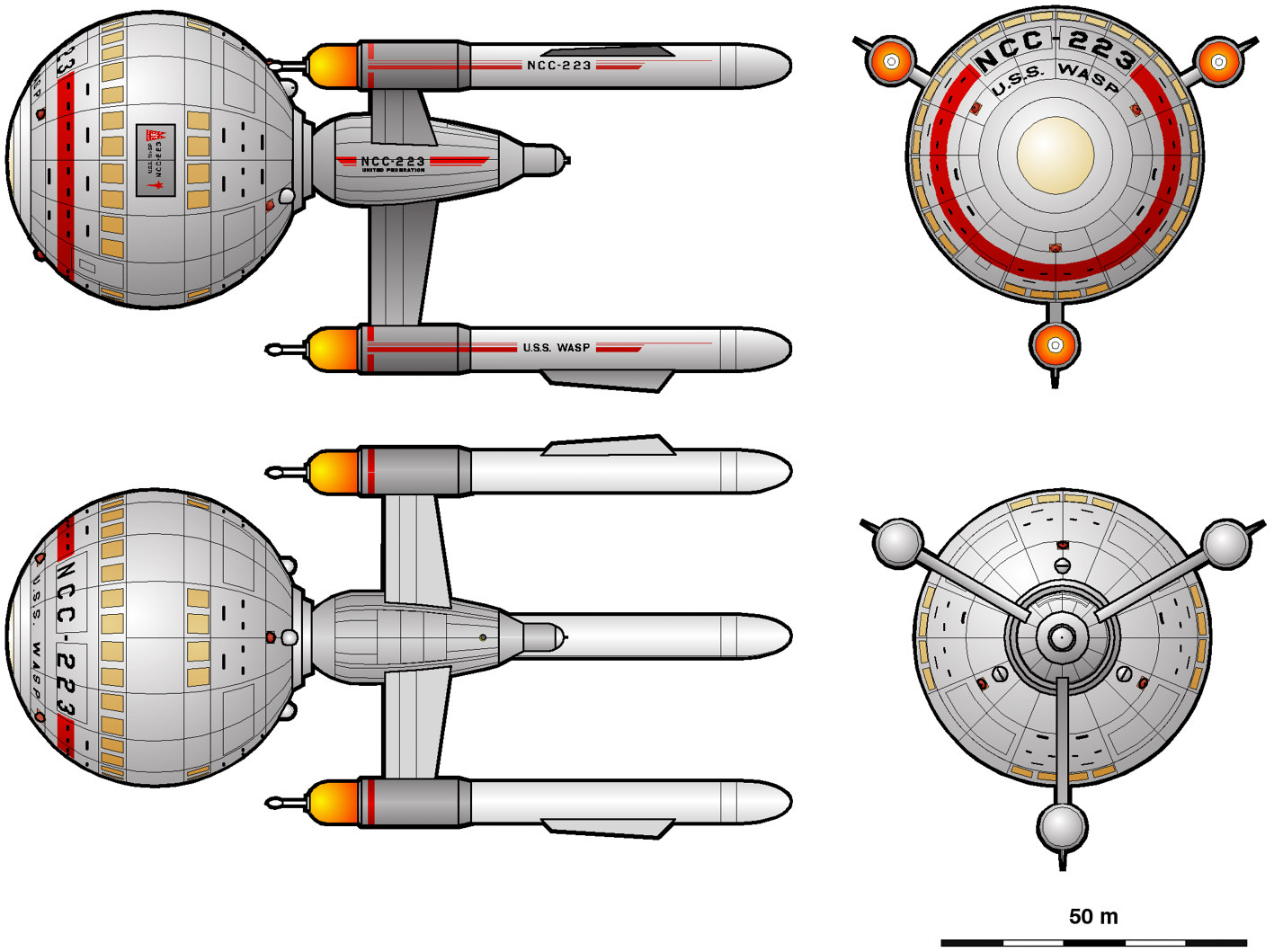 Original configuration |
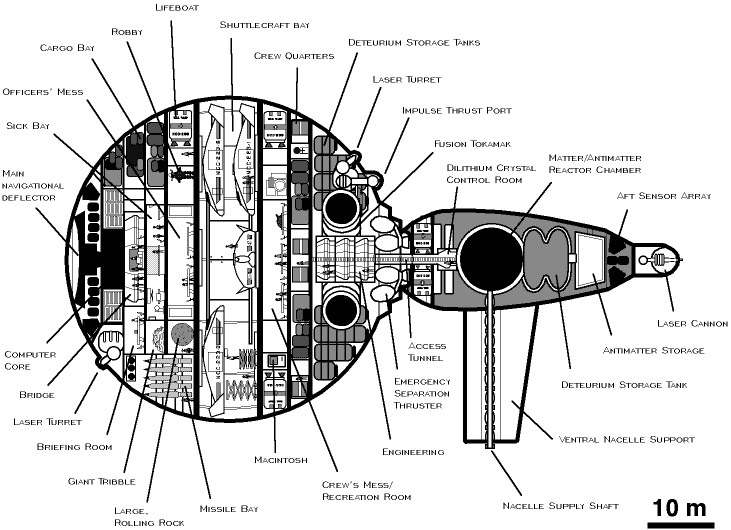 Cross-section |
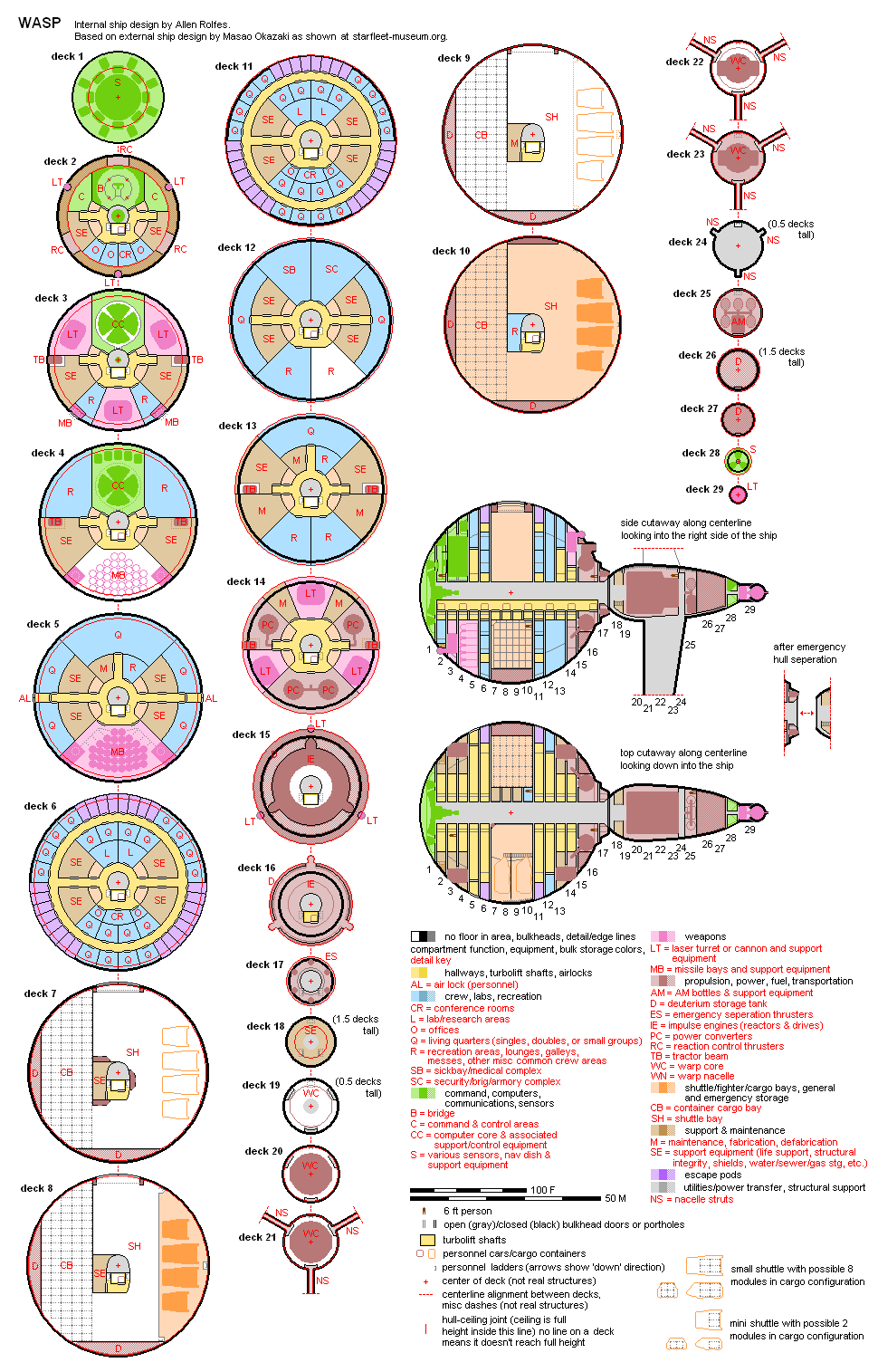 Deck plans created by Allen Rolfes (see notes) |
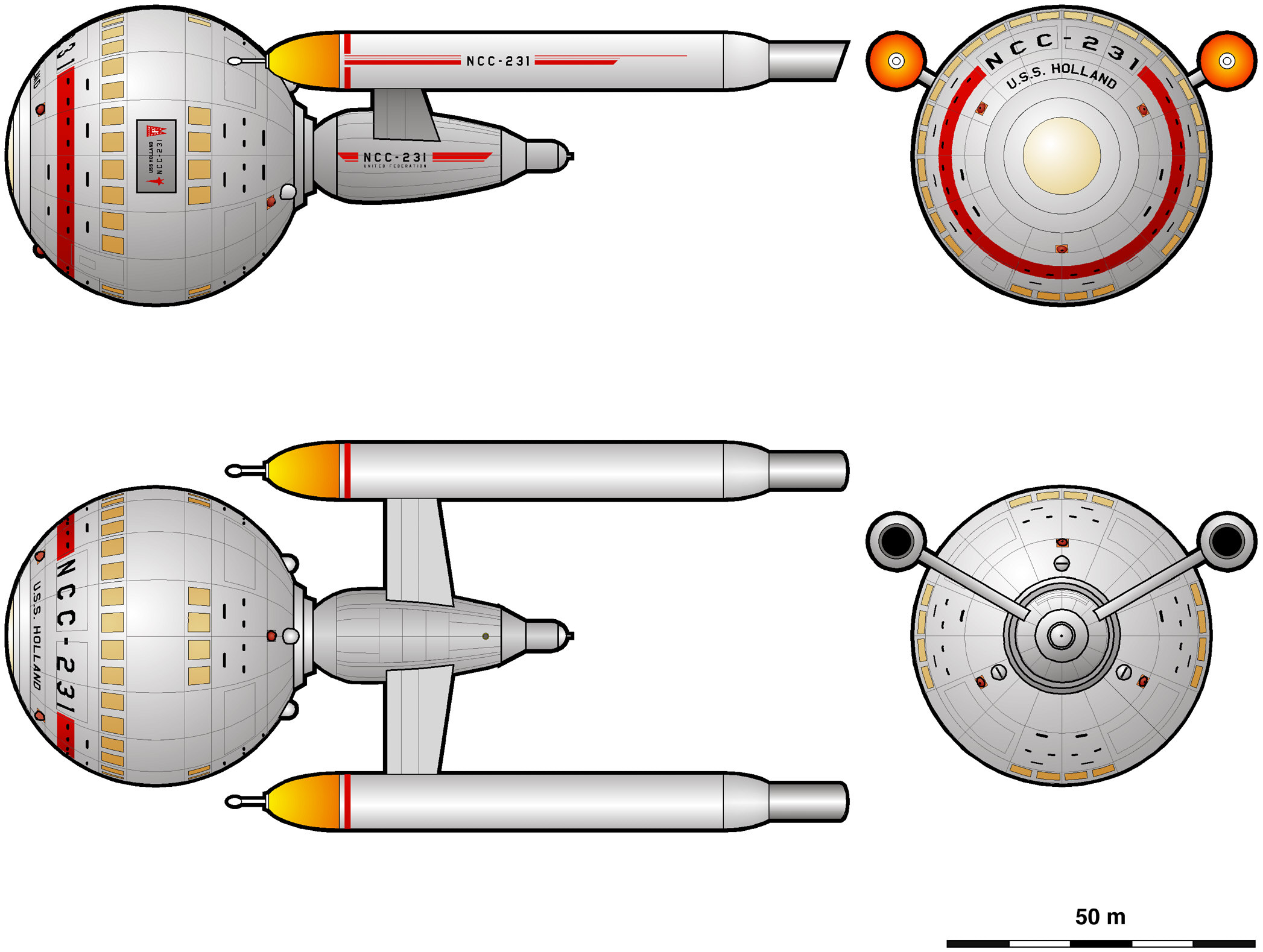 2-nacelled variant |
 Comparison of the variants |
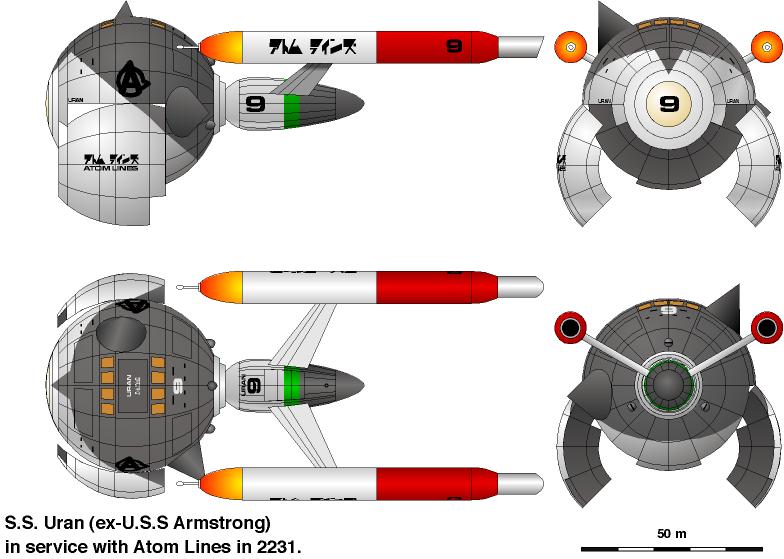 Converted to transport |
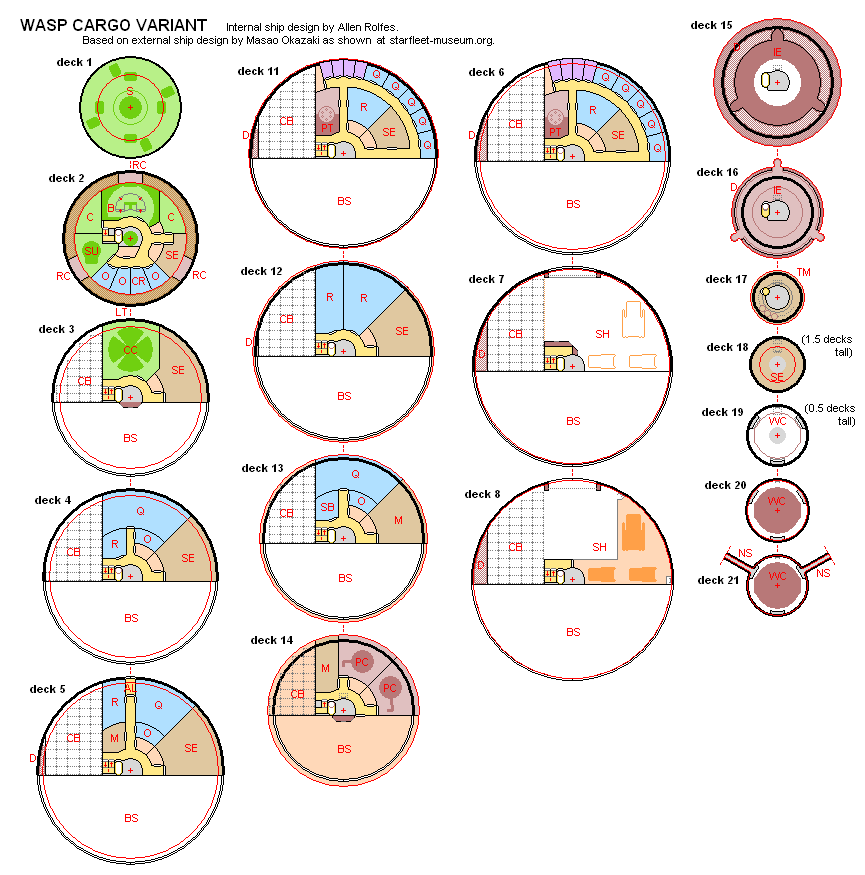 Cargo variant plans, part 1 created by Allen Rolfes (see notes) |
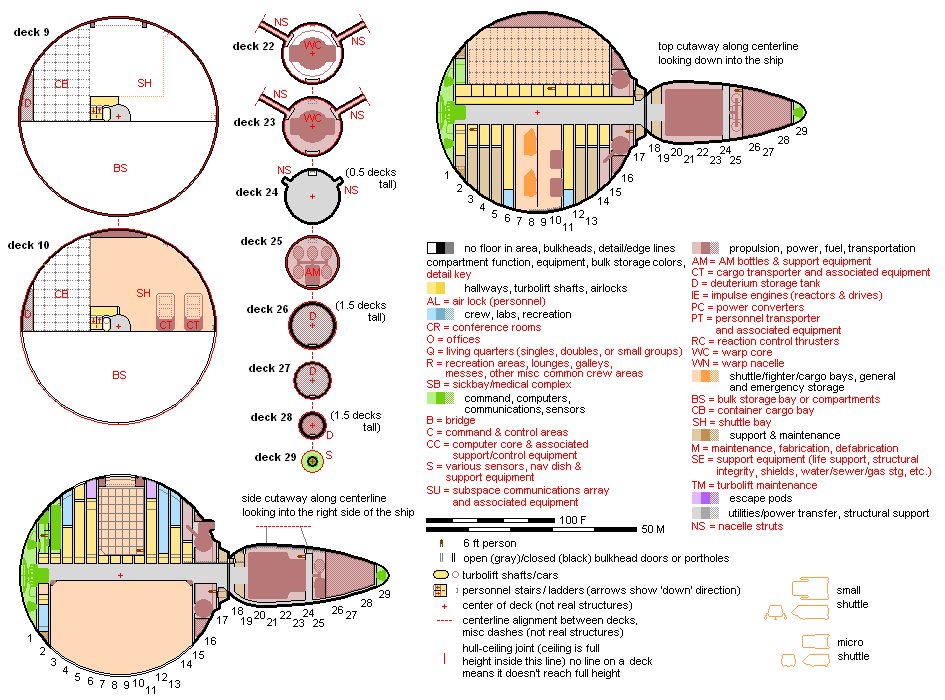 Cargo variant plans, part 2 created by Allen Rolfes (see notes) |
Scenes
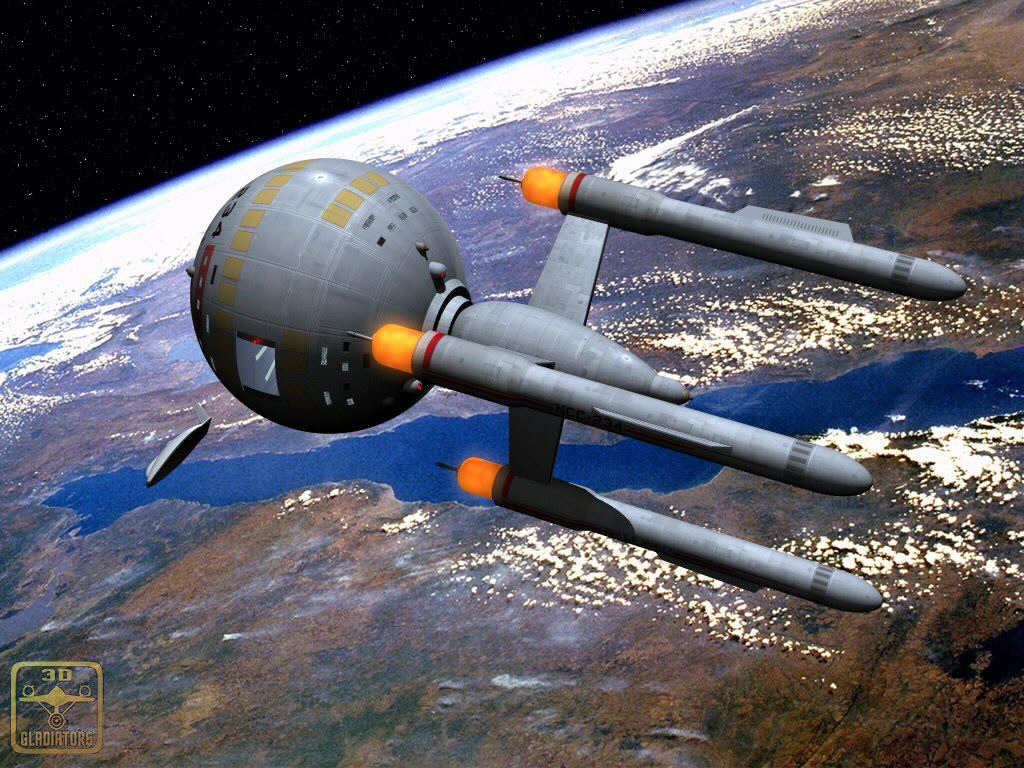 U.S.S. Hunley in orbit created by Thomas Pemberton |
U.S.S. Hunley, NCC-234, conducting shuttle operations in Earth orbit shortly before departing for a 3-year mission of exploration. The Wasp-class cruisers had a complement of 10 such vehicles. |
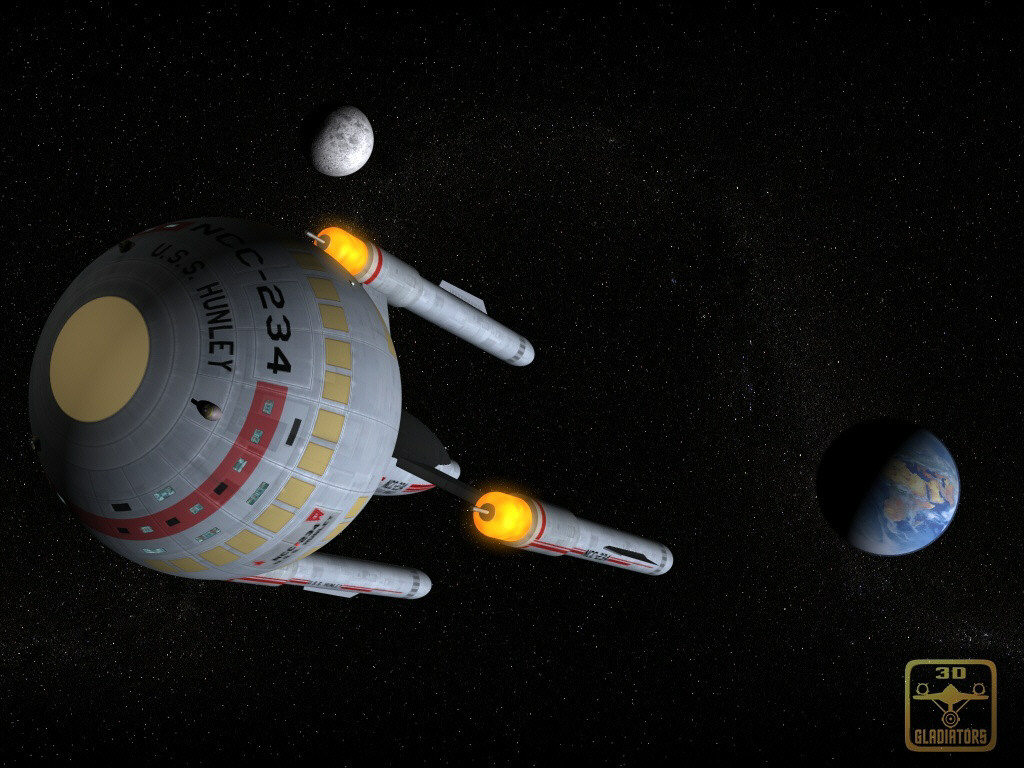 U.S.S. Hunley leaving Earth created by Thomas Pemberton |
The Wasp-class cruiser U.S.S. Hunley, NCC-234, departing Earth space in 2174. |
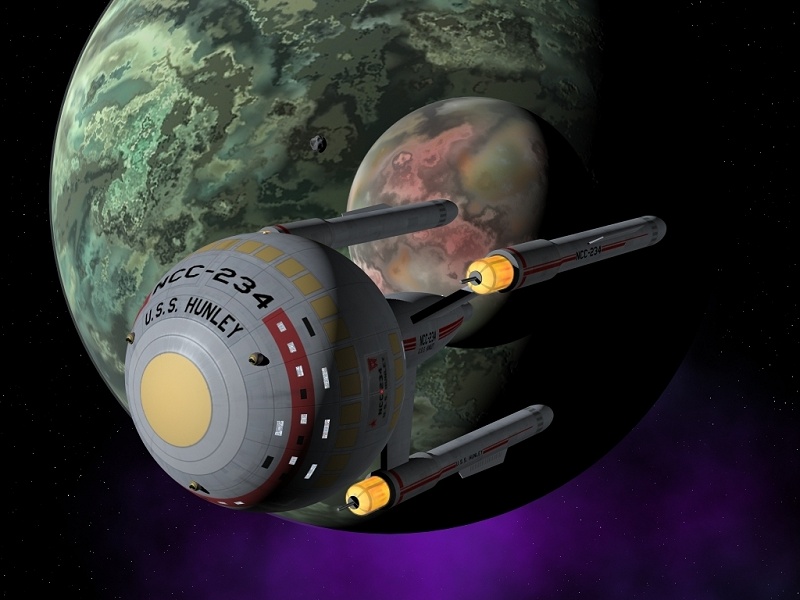 U.S.S. Hunley at Strnad V created by Thomas Pemberton |
U.S.S Hunley at Strnad V in early 2176. One moon of the gas giant, Strnad V-A, was believed to support life. When the Hunley found no lifeforms, the captain recommended to terraform the moon, as a future site of a Federation colony. |
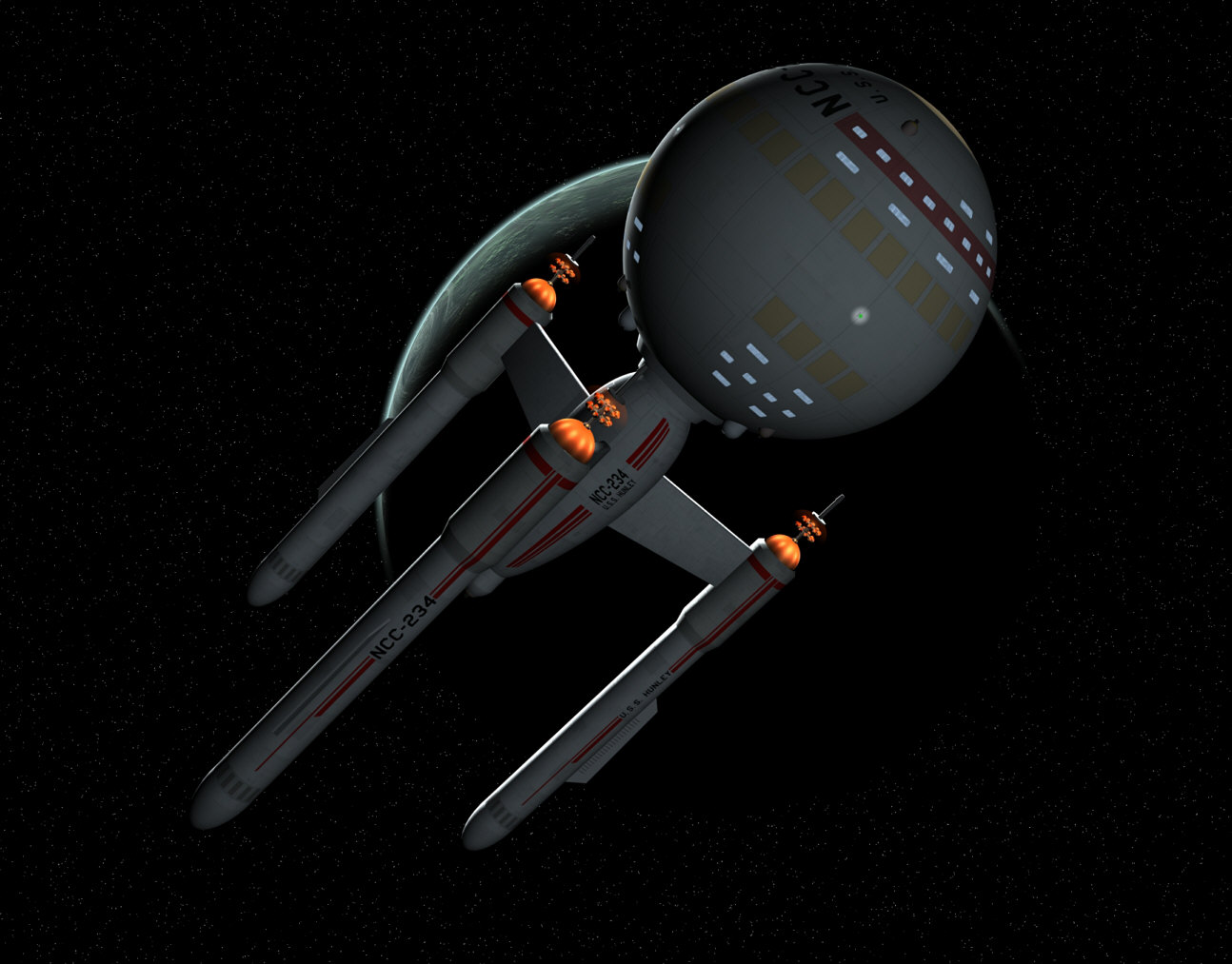 U.S.S. Hunley leaving orbit created by Thomas Pemberton |
U.S.S. Hunley activates its impulse engines to leave orbit of Strnad V-A. |
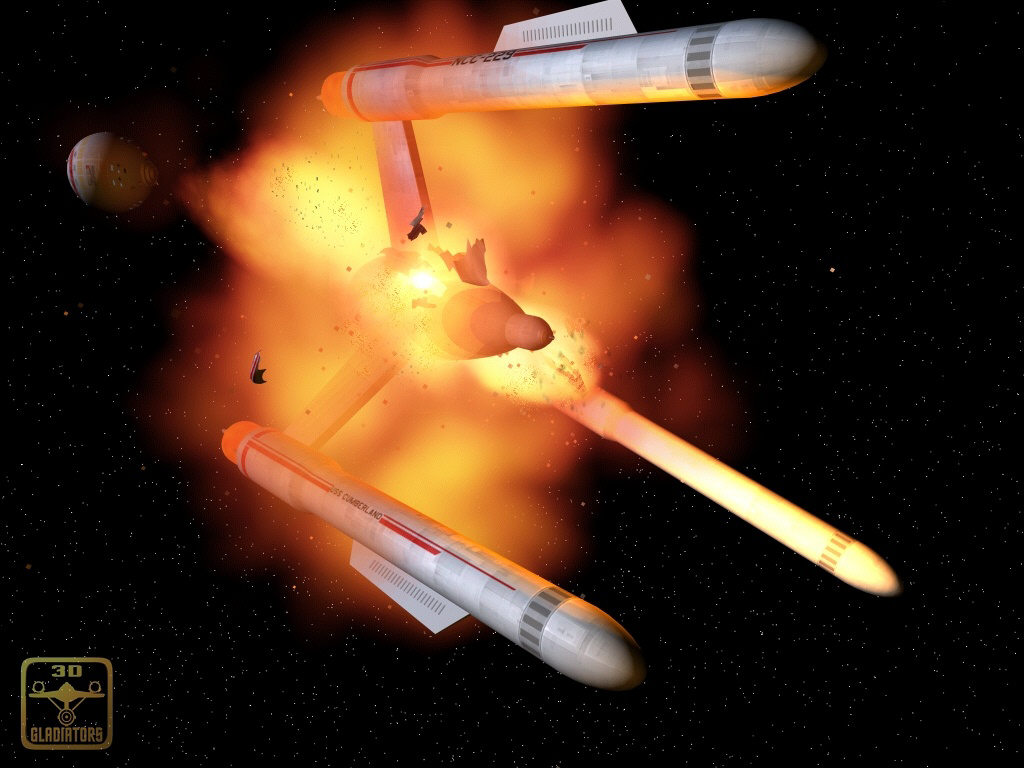 Cumberland warp core breach created by Thomas Pemberton |
While on a survey mission in sector 539 the U.S.S. Cumberland, NCC-229, suffers a warp core breach. The Cumberland would survive this disaster with the primary hull successfully detaching and clearing the destruction. She would make it to Theta Draconis VII and ultimately be refitted and returned to duty. |
More Images
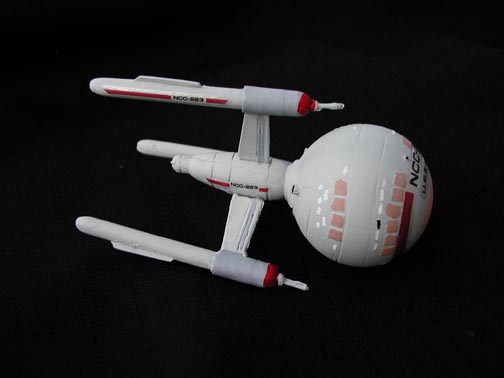 Physical model created by Rick |
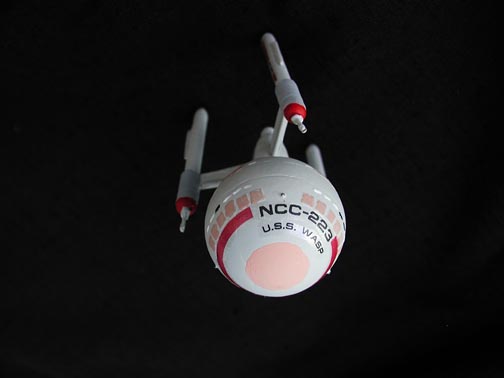 Physical model created by Rick |
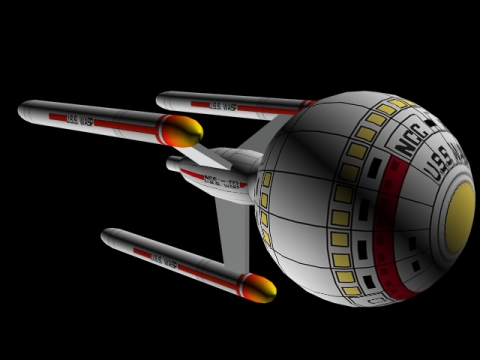 3D-model created by Paul van Garderen |
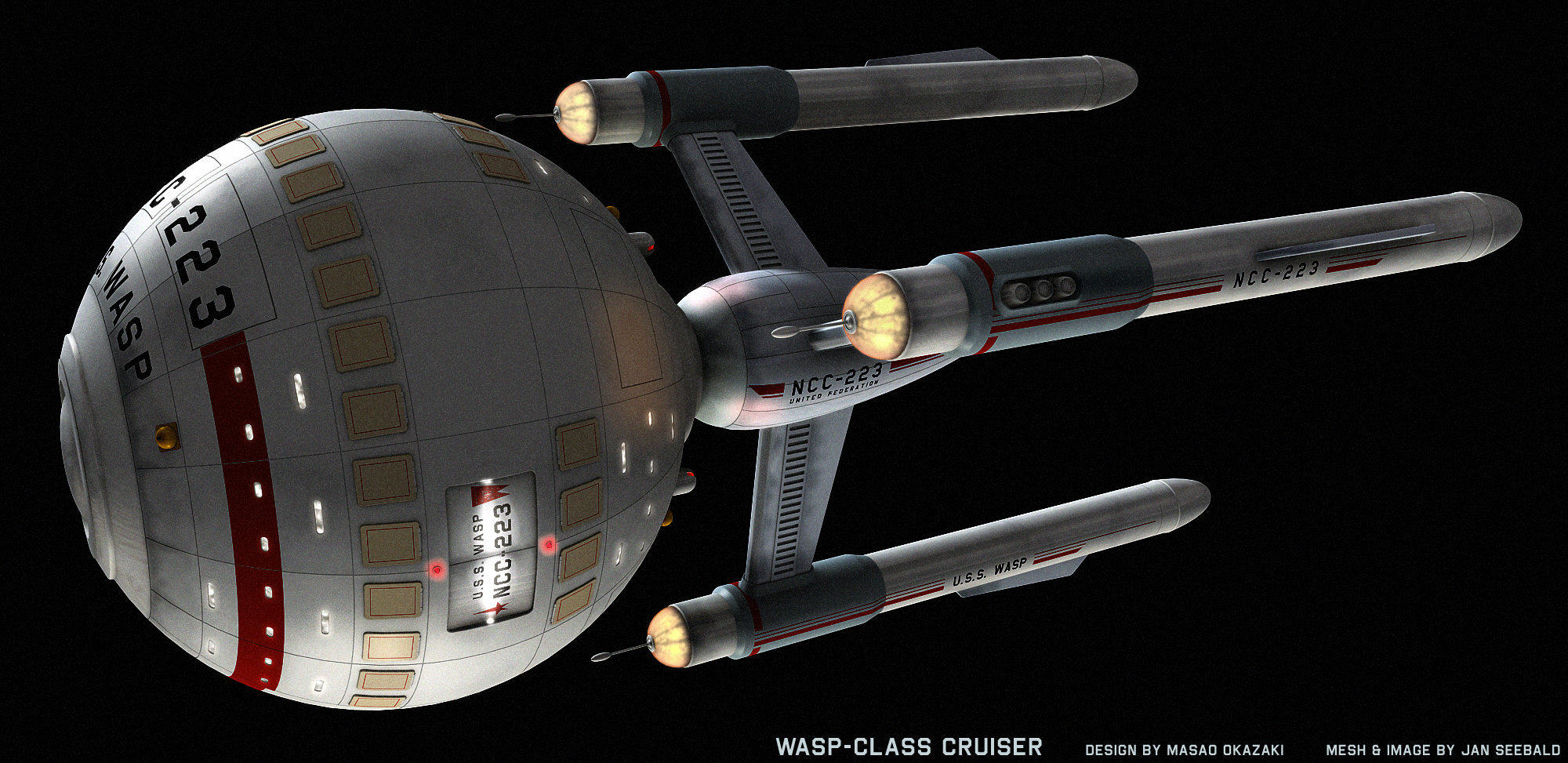 3D model created by Jan Seebald |
History
The United Earth Stellar Navy's (UESN) first-generation matter/antimatter (M/AM)-powered ships, which included the Krechet, Yorktown, and Powhatan classes, will always be remembered as one of the main reasons Earth prevailed in its war against the Romulan Star Empire. Because the Romulans had not yet developed M/AM-powered warp drive, Earth forces could choose when and where to engage the numerically superior Romulan fleet. Although the war lasted for four years, Earth's victory was perhaps inevitable given its superior technology and industrial capacity. In the final years of the war, the first of the second generation of M/AM-powered ships—the Comet class of light cruisers—entered production. Comets saw extensive service as scouts, sensor pickets, and light strike cruisers during the UESN's final push towards the Romulan Homeworlds. They also were the basis of the Daedalus class of exploratory cruisers, which joined the UESN just before the end of the war.
After the end of hostilities and the founding of the United Federation of Planets (UFP) in 2161, the Daedalus-class ships continued to be produced as Starfleet's first deep-space exploratory cruisers. Although they have earned an honored place in the history of galactic exploration, Daedalus-class ships are acknowledged to have had several significant shortcomings, chief among them being insufficient crew and scientific facilities, and poor warp core safety.
In the 2160s and early 2170s, catastrophic warp-core breaches still occurred with alarming frequency. Several Daedalus-class ships are believed to have been lost in this way. Although Daedalus' command hull could be separated from the engineering hull in such an event, the process was time-consuming and the emergency chemical thrusters of the command hull were not sufficiently powerful to propel it rapidly beyond the blast radius of the exploding warp core. Unless separation and thrust application were begun at least 10 minutes before the explosion, the command hull was unlikely to escape undamaged.
These shortcomings became tragically evident when a warp core breach occurred aboard USS Lincoln (NCC-182) in June 2165. According to a message buoy recovered months later, the engineering hull was believed to have been holed by a debris fragment or micrometeor. Although the command and engineering hulls were successfully separated, all hands were lost when the primary hull's emergency thrusters failed to ignite owing to malfunction of the hypergolic fuel pumps. The losses of Essex, Shenandoah, Horizon, and Archon in a period of less than 6 months in late 2167 and early 2168 further decreased confidence in the Daedalus class.
In the aftermath of these losses, various measures were considered to decrease the likelihood of such disasters in the future. First, the installation of escape pods with more powerful thrusters were considered. However, because the proposed upgraded escape pods could only be installed after extensive modification of existing pod stations and surrounding hull sections, this option was abandoned. Second, ways of ejecting the warp core from the ship were considered. Unfortunately, in the late 2160s warp cores were still too large to be jettisoned during emergencies. In fact, the SSWR-IV-2 warp reactors used in the Daedalus class could be removed only by cutting through sections of the hull in dry dock. Fully ejectable warp cores were not to enter service until the Lancaster class in 2204.
It was clear that the only way to ensure adequate separation of crew and warp core was through use of the impulse drive. Accordingly, separation procedures were modified to include application of impulse thrusters in the engineering hull to propel it and the warp core a safe distance from the command hull. However, even this solution was fraught with uncertainties. If command relays between the hulls had sustained any damage, the impulse drive might not even be operable. If impulse thrust was applied unequally or without adequate control, the engineering hull could tumble wildly or even pursue the command hull.
Even if separation was successful, the primary hull, after its emergency chemical thrusters were exhausted, would be left to coast unpowered until rescue. In the early days of the Federation, a ship coasting at a small fraction of c—which could be achieved with emergency thrusters—might take months or even years to reach a starbase or Federation colony or to be met by a rescue ship. However, the limited facilities of the Daedalus command hull meant that its use as a lifeboat for more than a few weeks would be extremely difficult. If planetary orbit were achieved, planetfall could be made with escape pods. However, the idea of a crew making first contact with an unprepared civilization was too horrible to contemplate.
Starfleet recognized that the safety of the crew could be ensured both during and after explosion of the warp core only by duplicating or transferring the impulse drive, including its fusion generator, to the command hull. Because having two impulse drives was clearly impractical owing to weight and space limitations, studies were undertaken to examine the feasibility of transferring the impulse drive to the command hull. However, the small primary hull of the Daedalus class ruled out such an extensive refit. Primary-hull space was already inadequate in Daedalus, severely limiting range, endurance, and mission capabilities.
Therefore, when specifications for the successor to Daedalus were announced in April 2169 they included a primary hull impulse drive; emergency hull separation to a distance of 5,000 km within 5 minutes; and the relocation of all essential ship functions and facilities, except the warp core and antimatter containment, to the command hull. (Terminology at that time did not include "primary" and "secondary" hull.) Furthermore, internal hull volume for crew and scientific facilities were to be increased 300% over Daedalus and unfueled duration at cruising speed was to be 3 years.
 |
 |
 |
| Shield designed by Ken Roberts |
After an 18-month design and competition phase the production contract for the new Wasp class was awarded in October 2171 to Prosser & Ankopitch (based in Alma-Ata, Earth) over entries from Mikoyan-Tupolev-Dassault, Tezuka-Republic, and Presteign. The winning entry was actually based on a design study, code-named "SIGMA," for a successor to the Daedalus class which had been prepared by Hoshigawa Astral Engineering shortly after the end of the Romulan War. The lead ship of the new class, USS Wasp (NCC-223), was launched in December 2173 from the Prosser & Ankopitch's LEO Construction Facility No. 5 and commissioned in November 2174.

Ships of the Wasp class had a large spherical command hull that contained the impulse drive and fusion reactor, crew quarters, shuttlebays, computer core, cargo decks, and command centers, navigational deflectors, sensors, and missile launch facility and warhead storage. For the last time in a cruiser class, the decks were stacked along the ship's longitudinal axis. This arrangement allowed the 10-m-tall shuttlebay to extend the full diameter of the command hull. Since man-rated transporters were not to enter service for a further 40 years, the Wasp class had to carry shuttles of sufficient capacity to evacuate the crew plus emergency equipment and supplies to a planet's surface. The volume of the command hull (59,000 m^3) was more than six-fold larger than that of Daedalus-class ships (9,000 m^3). This increased hull volume allowed larger facilities for research, sensors, and crew accommodations. Total internal hull volume was increased by 300%. Endurance was also increased owing to the larger quantities of fuel and ships stores that could be carried. As intended, the endurance of the primary hull as a lifeboat—2 years—was identical to that under normal conditions.
The tokamak fusion reactor, deuterium tanks, and impulse thrust ports were located in the far aft portion of the command hull. The main engineering control center was placed in the center of the 20-m-diameter tokamak. From there, the warp reactor control room in the secondary hull could be reached by an access tunnel. Further aft were the warp core and antimatter storage bottles, which could only be reached by access panels and refueling ports on the outside of the hull. In the extreme aft section of the secondary hull was a point defense laser cannon "stinger."
The increased safety of the Wasp class was clearly demonstrated when the USS Cumberland (NCC-229) suffered a catastrophic warp core containment breach in 2177 while on a survey mission in Sector 539. The small engineering staff was quickly evacuated from the warp reactor control room, after which the primary hull was successfully detached and maneuvered to a distance of 8,000 km by the time the warp core exploded. No casualties were sustained during evacuation and separation. Under impulse power, the command hull of Cumberland (which had been christened "The Death Star" by the crew) entered orbit around Theta Draconis VII (now known as the Shin-Gamera colony) 5 months later. There, she waited an additional 3 months for the arrival of USS Mercator (NCC-266, a Huxley-class surveyor), which, equipped with a special tractor beam rig, towed her at low warp speed to Starbase 15. In spacedock, a new engineering hull was attached, and Cumberland was relaunched 14 months after the accident.
Although safety and endurance were greatly improved, the warp performance of the Wasp class was worse than expected. One reason was that owing to production delays the first eight ships of the Wasp class (NCC-223 to NCC-230) were forced to use three Napier Super Lion II-C warp nacelles in a 120° configuration rather than two of the more powerful Tezuka-Republic Hiryu ("Flying Dragon") mark III warp engines as had been intended. With three nacelles, the lobes of the warp field were somewhat more difficult to balance and turn and were more prone to coalescence failures than with two nacelles. As a result, Wasp was never able to meet specified performance levels. When the Hiryu units were finally delivered in 2177, they were retrofitted to ships already in service and installed in all subsequent ships. However, Starfleet was justifiably disappointed when the new engines improved warp performance only marginally. Accordingly, the last 5 ships in the projected 20 ship class were canceled after construction had already begun.
With the luxury of hindsight, it is clear that the main reason for the Wasp class's poor performance was that the large spherical command hull was inappropriate for an exploratory cruiser that also required maneuverability in combat. For this reason, the Wasp class has been considered by many to be a failure in its intended role. However, supporters of the class suggest that the failure lies with those who issued the original specifications. In fact, specifications for a new class of ships (NX-384, Moskva class) were issued only 13 months after Wasp entered service. While clearly not suited for front-line combat vessels, large spherical command hulls were subsequently used in numerous auxiliary starships, such as the Olympic-class hospital ships, the Edinburgh-class repair tenders, and the Halsey-class assault transports, and in countless civilian liners and transports.
Although Wasp-class ships were front-line combat vessels until only 2183, they continued to serve with periodic refits and upgrades as long-range explorers and survey ships until 2220. Several ships remained in service until 2245 after conversion to auxiliary types. When decks and bulkheads were removed and large clamshell loading doors were installed, objects up to 25,000 m^3 in size could be transported internally.
Of the fifteen Wasp class ships built, three (USS Decatur, USS Mars, and USS Holland) were lost in the line of duty and one (USS Tang) is overdue and presumed lost. Five ships were sold at the end of their service careers to commercial concerns and converted to starliners or transports. After being decommissioned in 2217, USS Kearsarge (NCC-226) was restored to its original three-nacelle configuration and is on display at the Starfleet Museum.
Commissioned Ships
| USS Wasp NCC-223 USS Decatur NCC-224 USS Ranger NCC-225 USS Kearsarge NCC-226 USS Jupiter NCC-227 USS Ericsson NCC-228 USS Cumberland NCC-229 USS Mars NCC-230 |
USS Holland NCC-231 USS Bushnell NCC-232 USS Armstrong NCC-233 USS Hunley NCC-234 USS Tang NCC-235 USS Nautilus NCC-236 USS Nelson NCC-237 |
*Hull numbers NCC-238 to NCC-242 were assigned, but construction was canceled.
Specifications*
Standard displacement: 62,308 mt
| Overall | 1° Hull | 2° Hull | Nacelles | |
| Length [m] | 128.29 | 48.32 | 41.95 | 85.69 |
| Beam [m] | 65.78 | 48.32 | 14.76 | 7.62 |
| Draft [m] | 62.00 | 48.32 | 14.76 | 7.62 |
Crew complement: 150 (27 officers + 123 crew)
Weapons: 6 Type VI laser turrets (6 × 1 mounts), 1 Type V laser "stinger", 2 missile launchers with 24 Silverfish missiles
Embarked craft: 4 medium cargo/personnel shuttlecraft, 4 light personnel shuttlecraft
Warp drive: SSWR-IV-C spherical cavity M/AM reactor with 3 Super Lion II-C nacelles
Velocity: wf 3.5, cruise; wf 4.4, supercruise; wf 4.6, maximum
Units commissioned: 15 (20 planned)
*Original configuration

 |
Last modified: 04.06.15 |