 |
 |
 |
|
|
|
Romulan Ships during the Earth-Romulan War
 Overview
Scenes
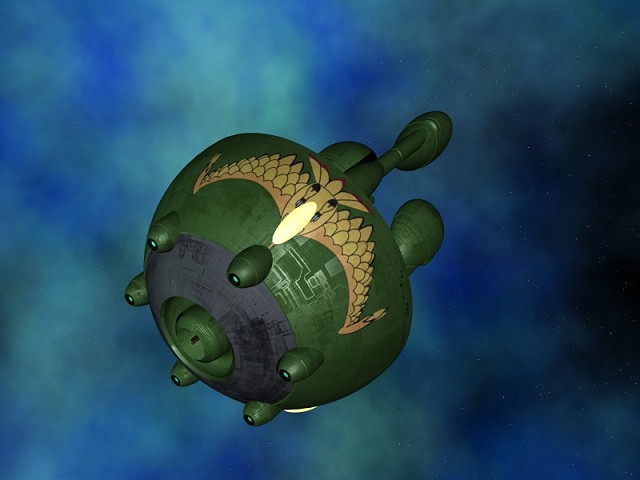 Romulan Cabbage created by Thomas Pemberton |
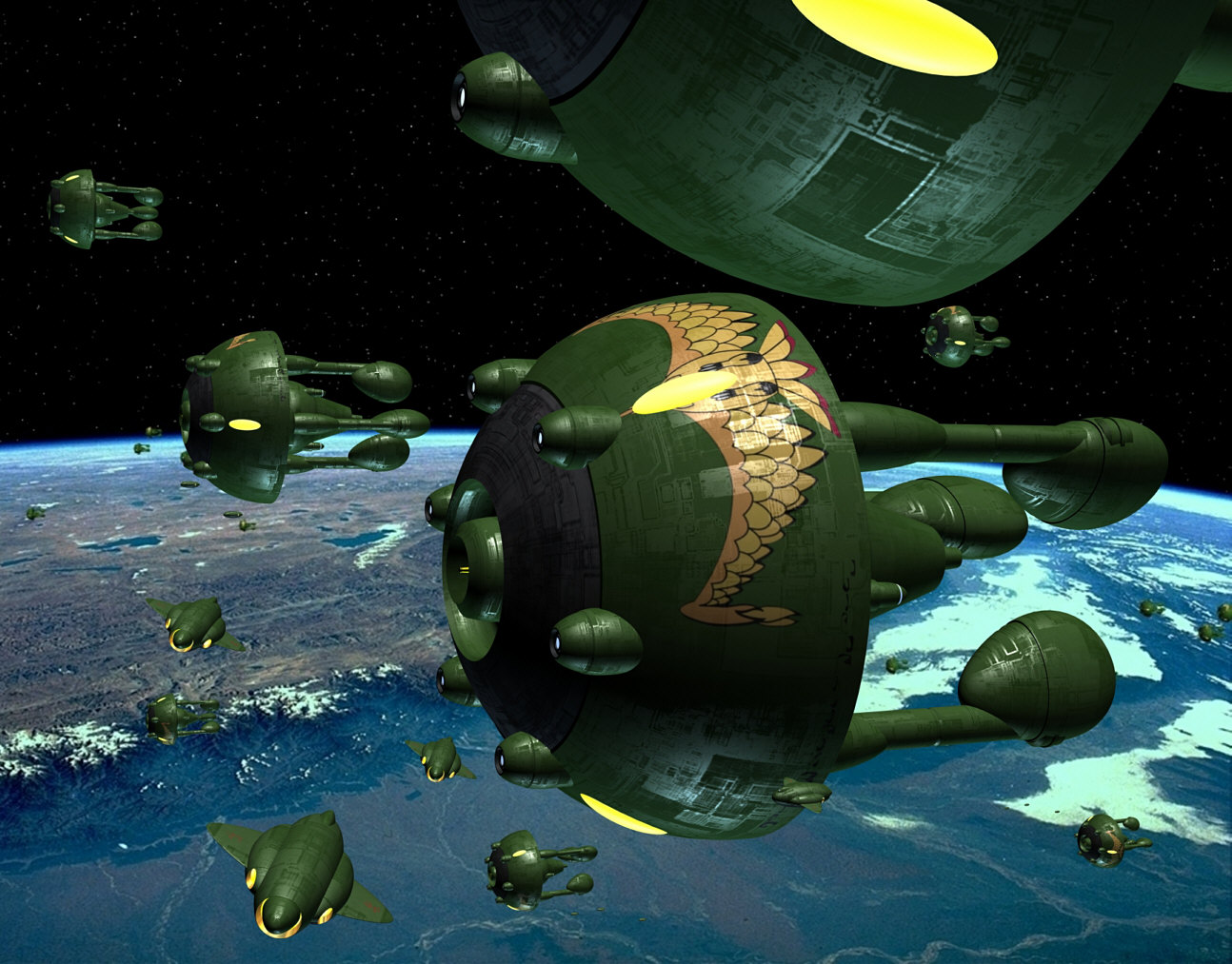 Cabbages in orbit created by Thomas Pemberton |
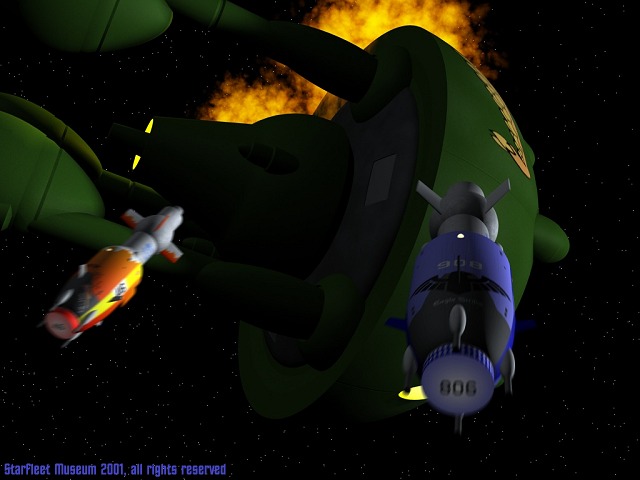 Minotaurs attack a Cabbage created by Thomas Pemberton |
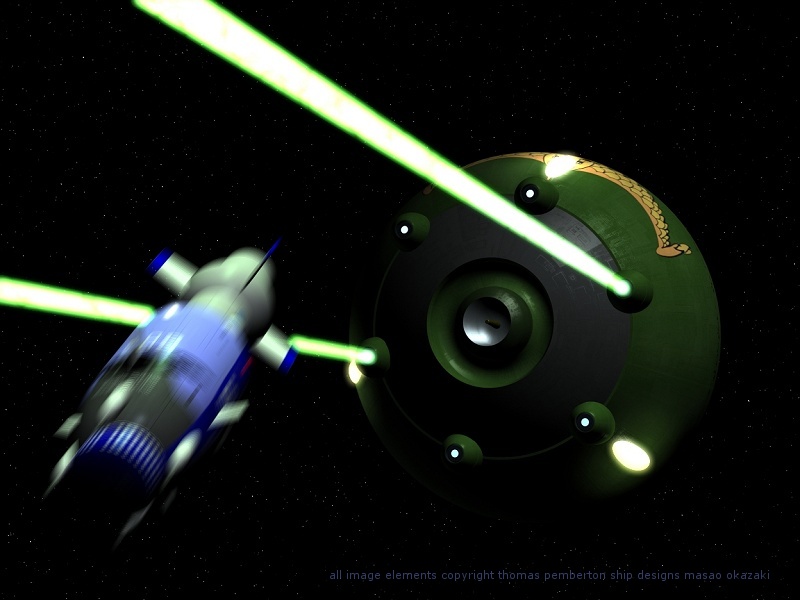 Minotaur against Cabbage created by Thomas Pemberton |
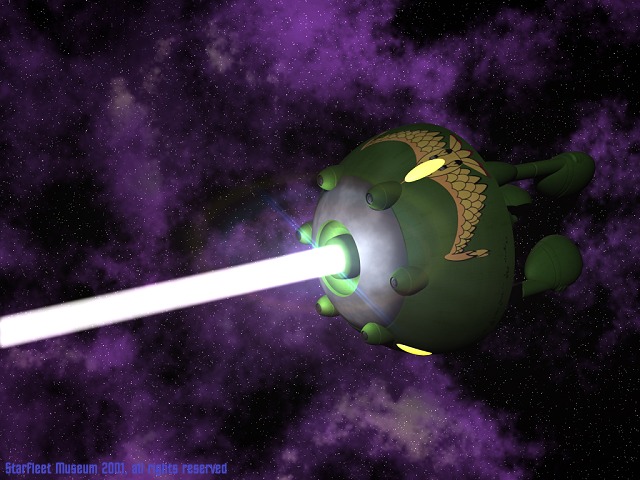 Cabbage fires plasma weapon created by Thomas Pemberton |
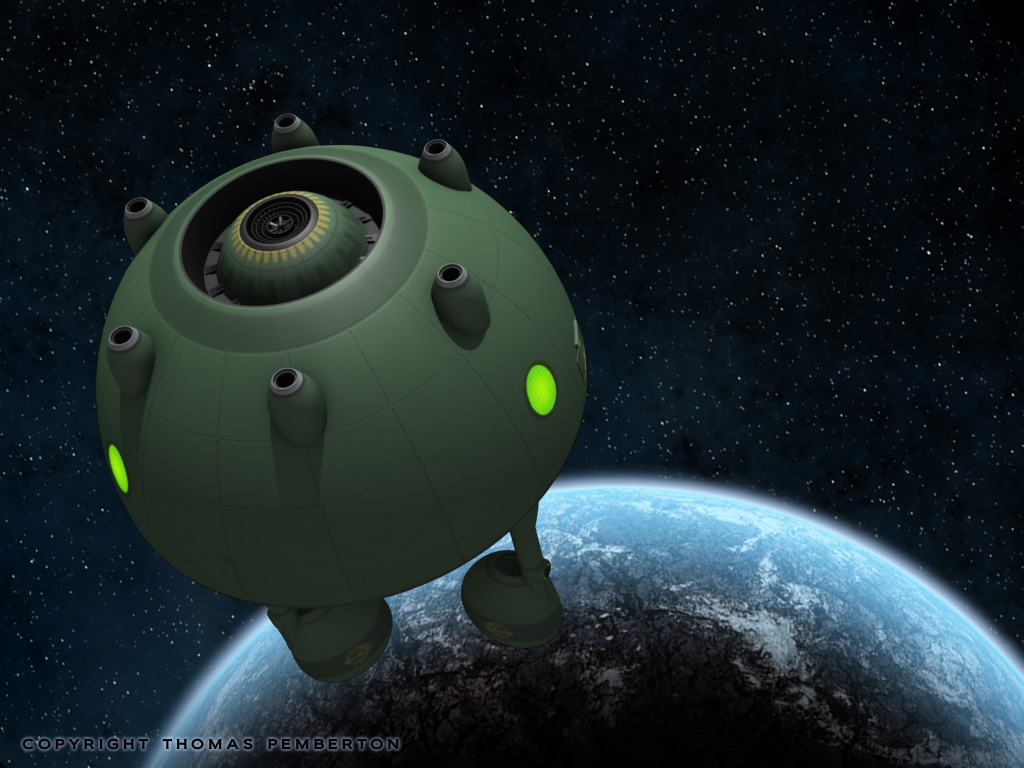 Cabbage new style created by Thomas Pemberton |
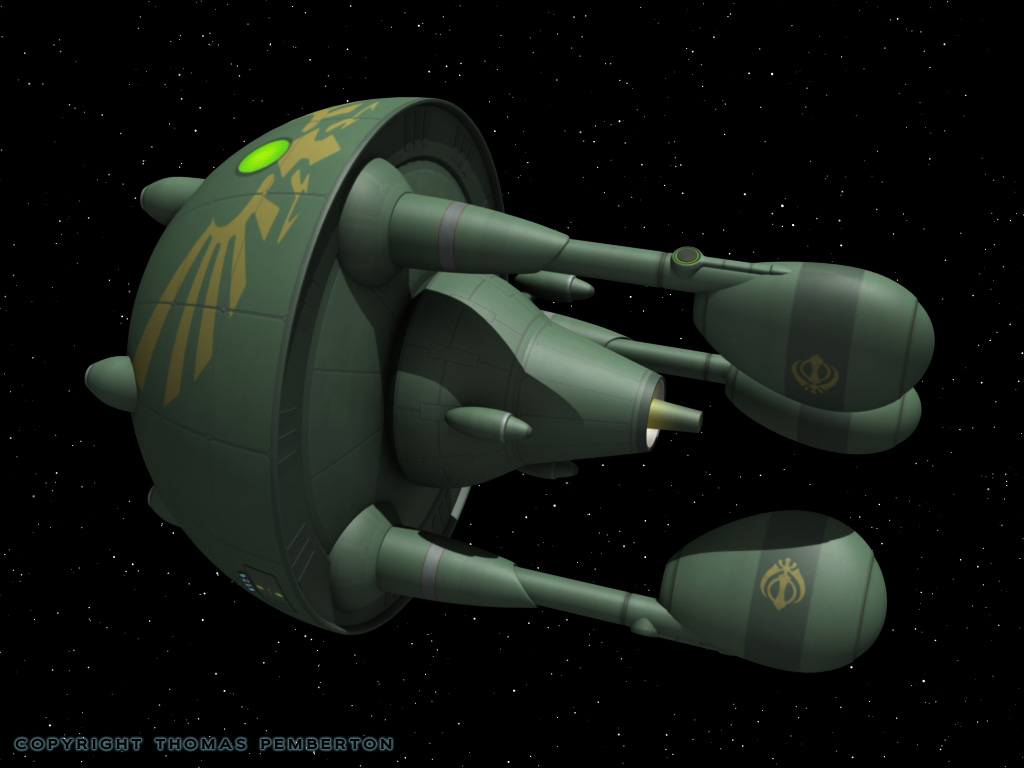 Cabbage new style created by Thomas Pemberton |
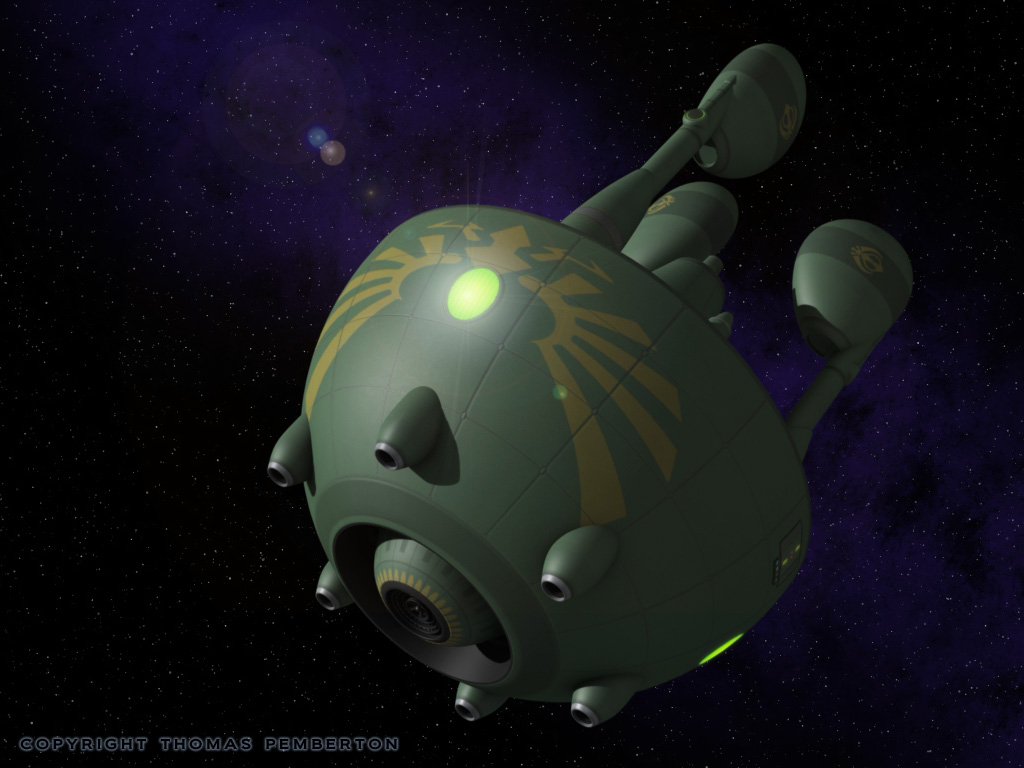 Cabbage new style created by Thomas Pemberton |
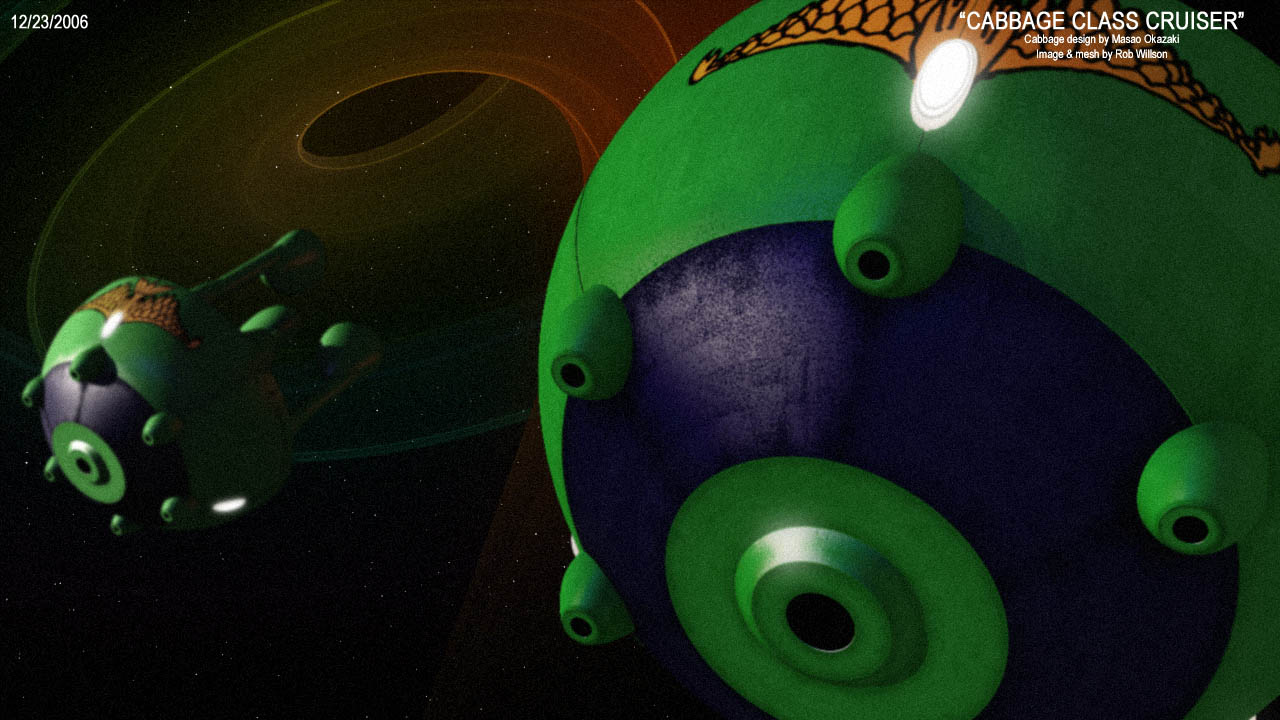 Romulan Cabbage cruisers image & mesh by Rob Willson |
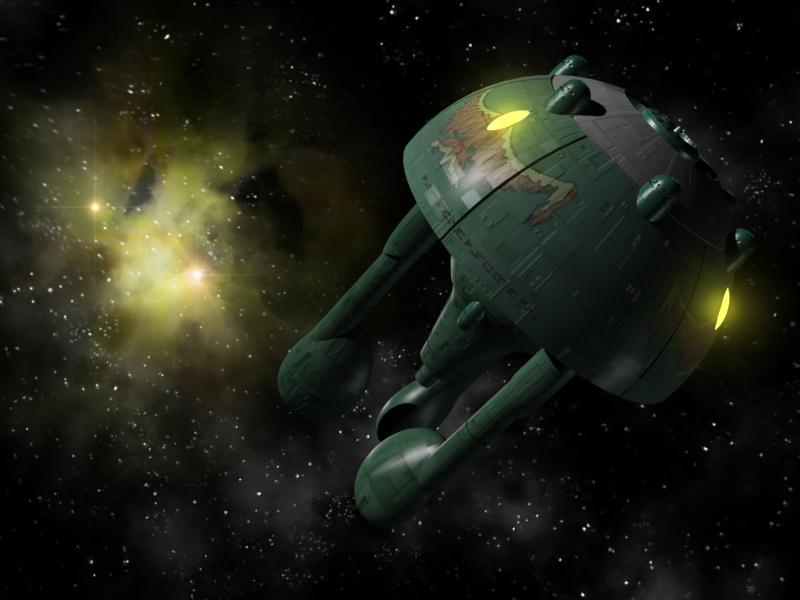 Romulan Cabbage and nebula created by Christopher Griggs |
 Romulan Cabbage created by Dragonpyper |
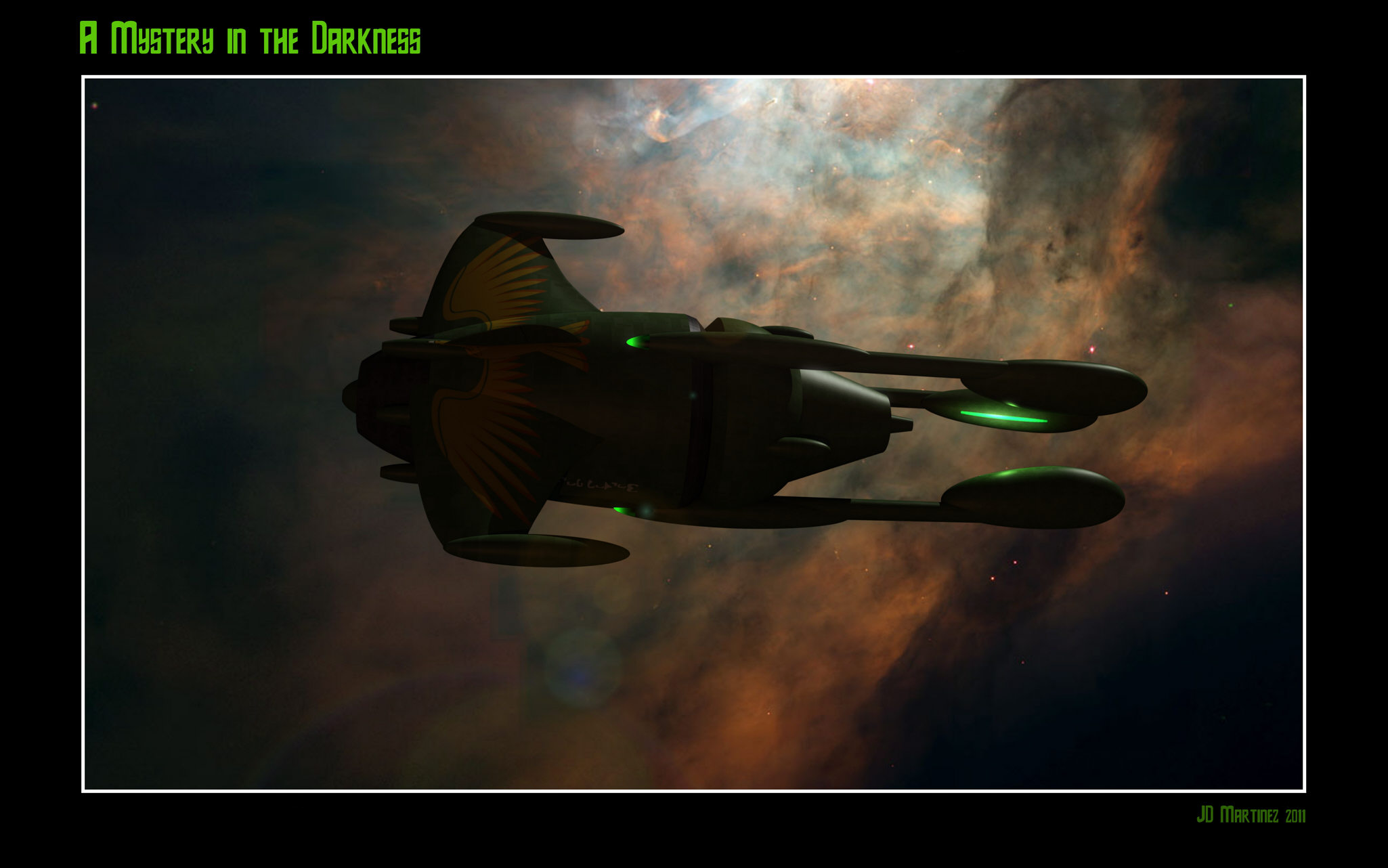 Romulan Chowder created by Dragonpyper |
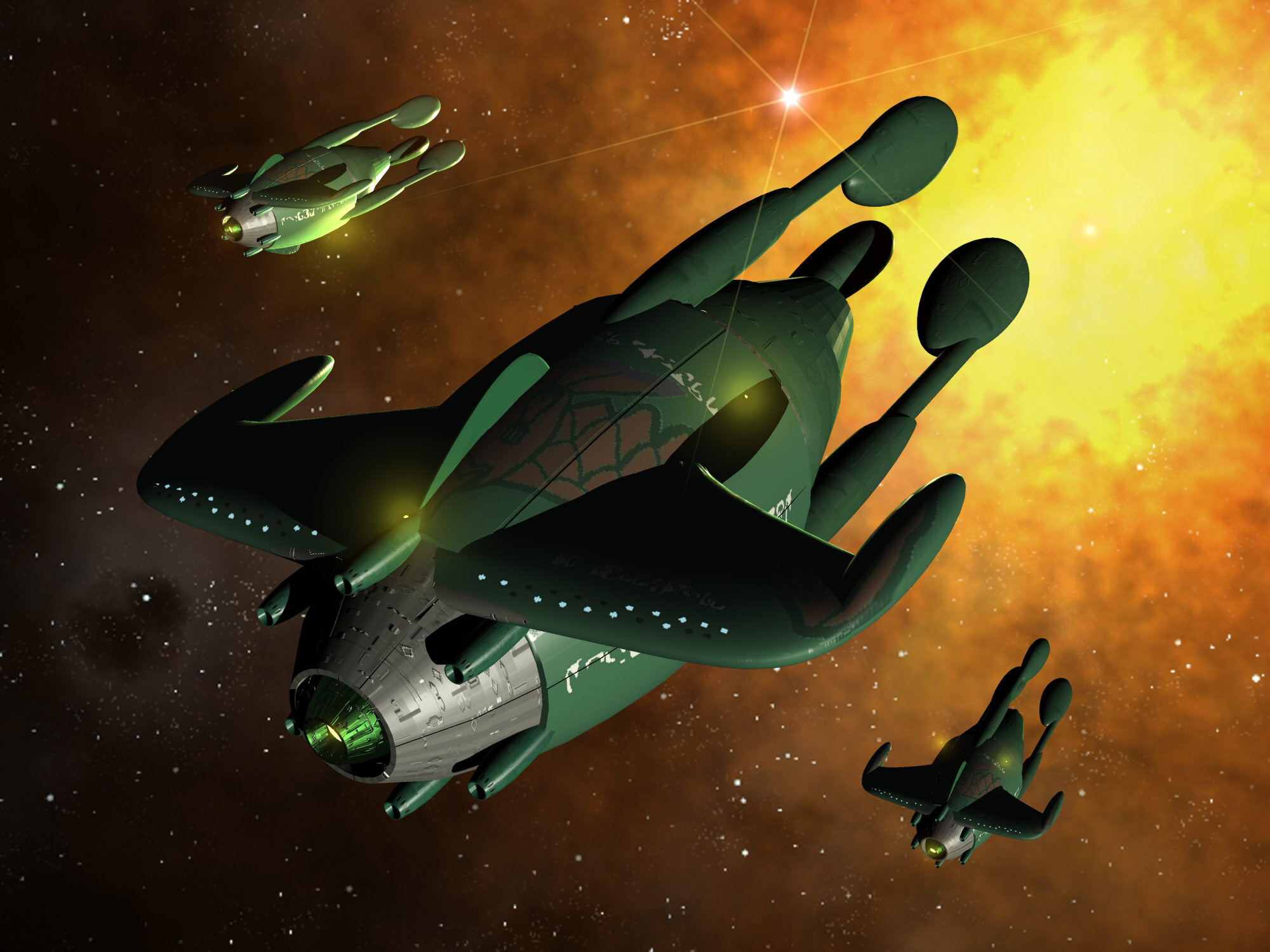 Romulan Chowder created by Christopher Griggs |
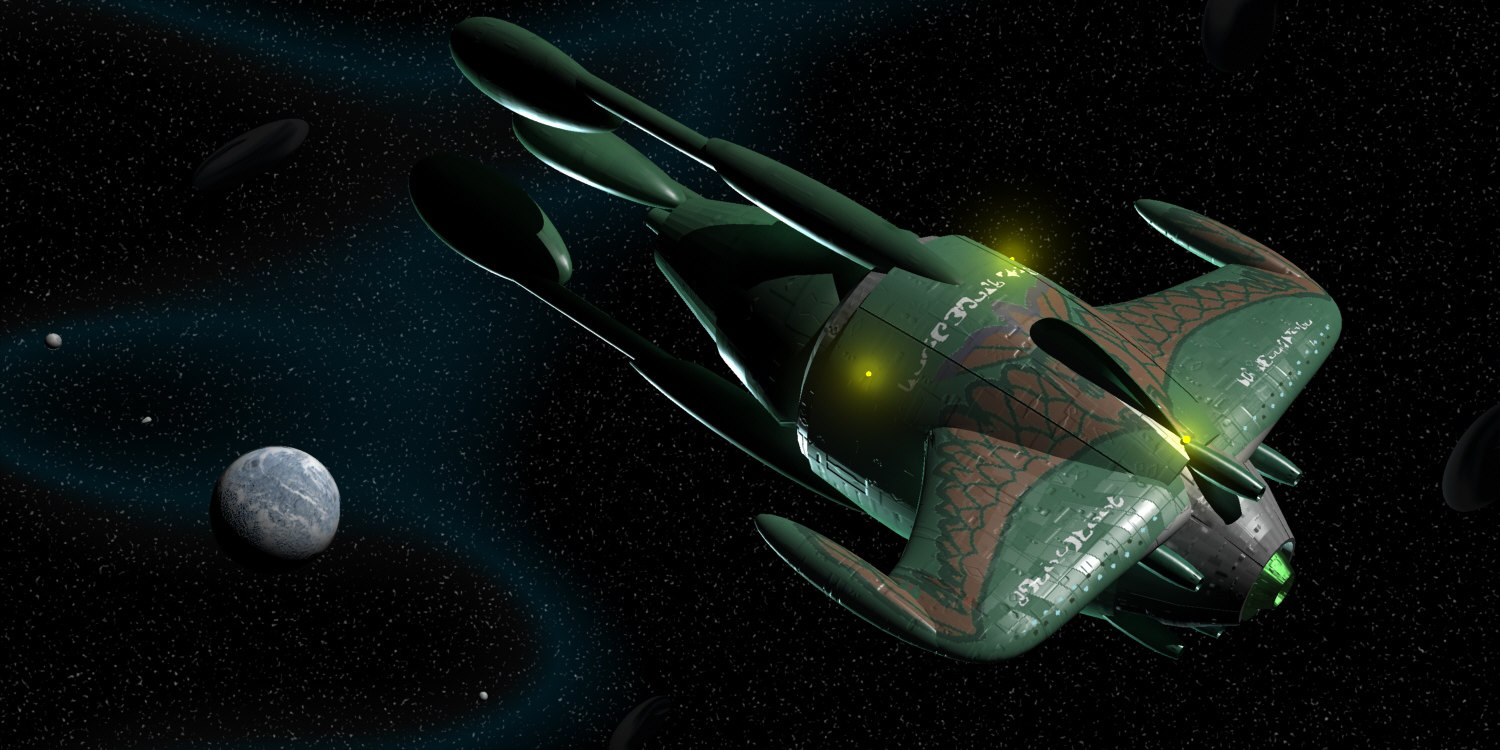 Chowder passing a planet created by Christopher Griggs |
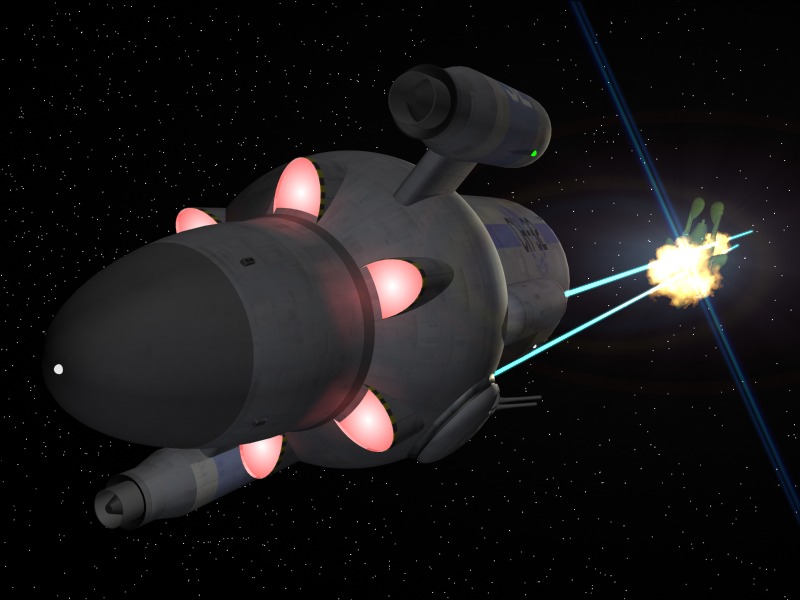 Pioneer destroying a Clavicle created by Thomas Pemberton |
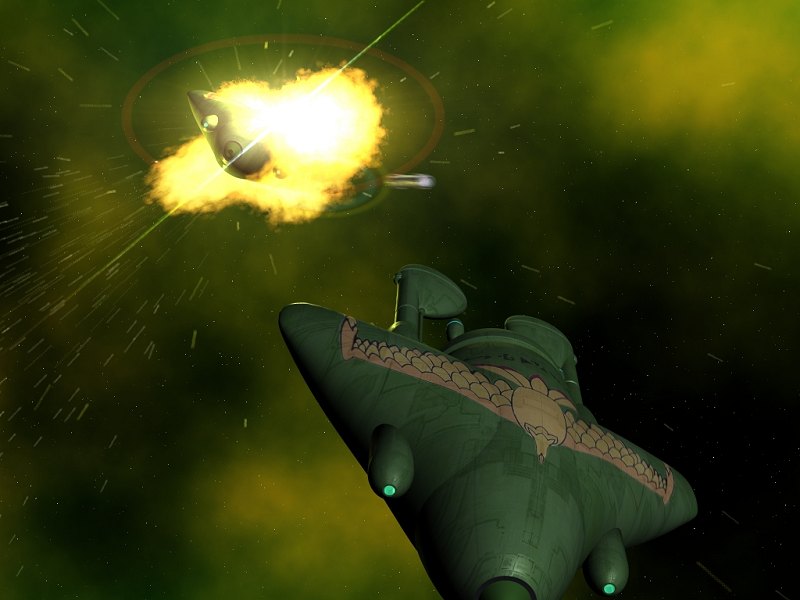 Clavicle being destroyed created by Thomas Pemberton |
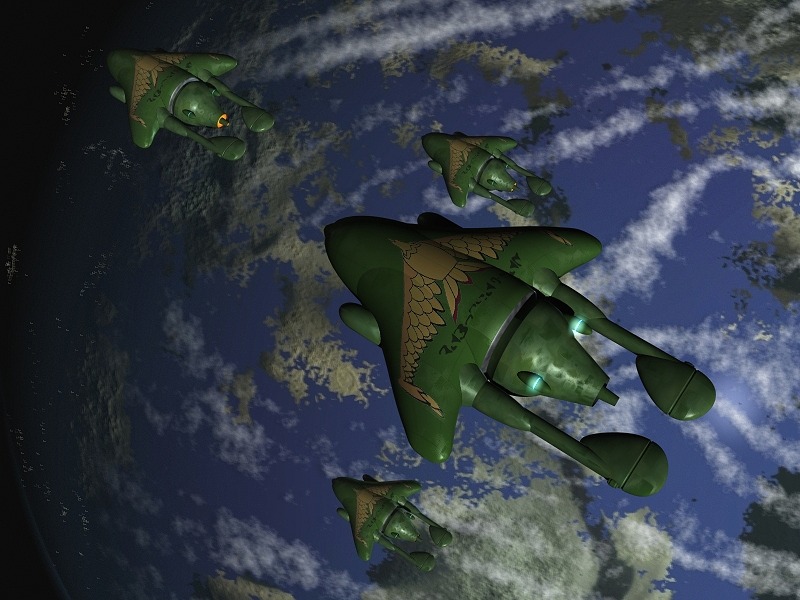 Clavicles in orbit created by Thomas Pemberton |
 Romulan fleet dropping out of warp created by Christopher Griggs |
History
Although the United Earth (UE)-Andor Alliance was at war with the Romulan Star Empire from 2156 through 2160, they knew very little about the ships of their enemies. The Romulans' standard practice of self-destruction with fusion weapons before possible capture meant that no reasonably intact Romulan ship had ever been examined at a range of less than 1,000 km by any United Earth Stellar Navy (UESN) personnel. Even after 50 Romulan ships had been destroyed several light-years within UE space at the Battle of the Vela Gap, the largest piece of a Romulan ship recovered by the UE Office of Technology Assessment weighed less than 10 tons. In fact, difficult as it is for us to understand today, the UE had no knowledge that the Romulans were an offshoot of the Vulcan race until more than a century after the end of the war. What little was known about Romulan ships was based on long-range scans and microtorpedo reconnaissance probes. Therefore, our estimates of Romulan ships' performance are based on observations during combat, and internal arrangements are largely conjectural.
However, in the more than 2 centuries since the end of the war, Federation historians have learned somewhat more about the Romulans' strategy and weapons. In particular, a Romulan commander who defected to the United Federation of Planets in 2268 was a valuable source of information, as persons with first-hand knowledge of the war were still alive at the time. Knowledge of the Romulans' primary war aim of conquering their ancestral homeworld of Vulcan was obtained from this source. In more recent years, the Klingons have also given us much valuable information. Since the end of the Dominion War and the posting of Ambassador Worf as envoy to Qo'noS, Federation historians have been granted limited access to Klingon records concerning their contacts with the Romulans, both in times of war and times of peace. Despite these valuable sources, however, much about the Romulans' prosecution of the war remains unknown.
At the start of the war in 2156 UESN Intelligence estimated, on the basis of the number of ships observed in combat, in orbit, and in transit between planets, that Romulan ships outnumbered UESN ships by a ratio of approximately 2.5 to 1. Romulan hull materials and power output levels appeared to be similar to those of UESN ships, which at the start of the war were all fusion powered. There was no evidence that the Romulans had developed matter/antimatter (M/AM)-powered ships, which would enter service with the UESN in 2157. In fact, there was no evidence that the Romulans were using antimatter for any purpose, even as munitions.
The Romulans were aware of their superiority in warship tonnage, and as a result were quite optimistic of victory in what they hoped would be a short conflict. However, this superiority would not help the Romulans achieve their war aims as neither they nor the UESN had ships that could make unrefueled interstellar attacks. Furthermore, any advantage that the Romulans had would be rendered moot within one year, when the first M/AM-powered ships would enter service with the UESN. The Romulans, of course, had no way of knowing that any chance of their winning the war would soon slip out of reach.
Postwar Romulan ships and history
Cabbage-class Cruisers*
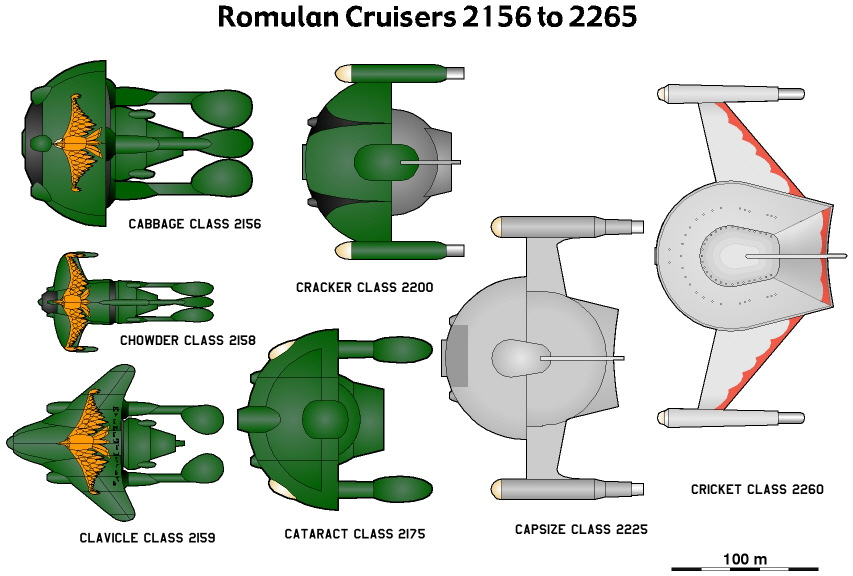
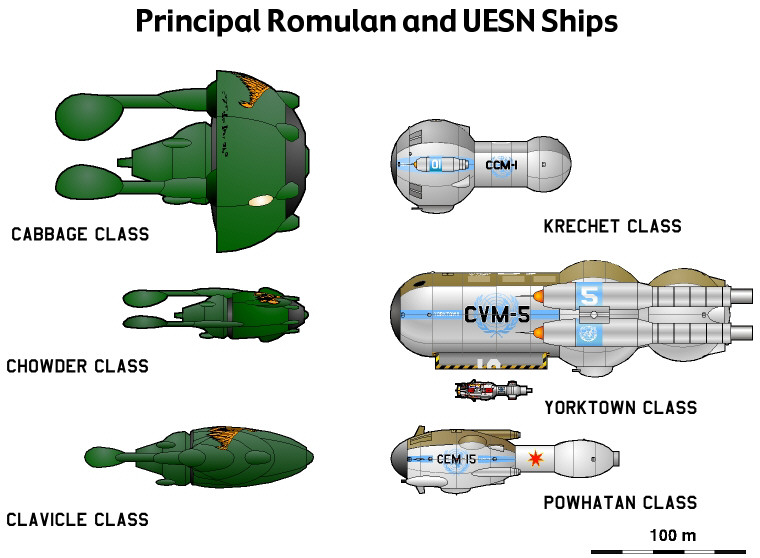
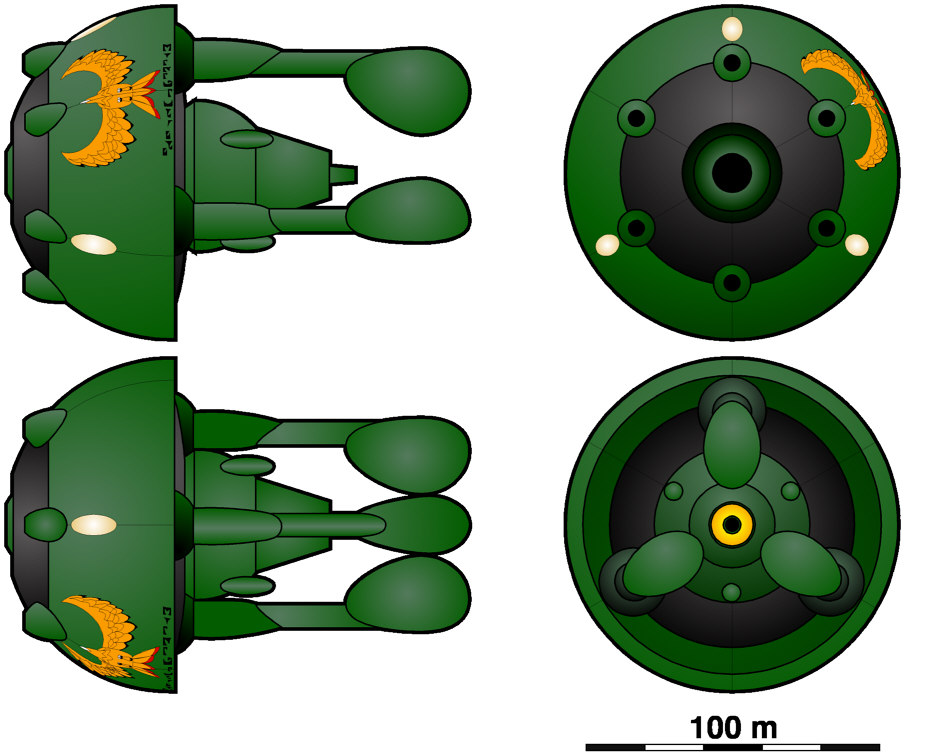 Orthographic views |
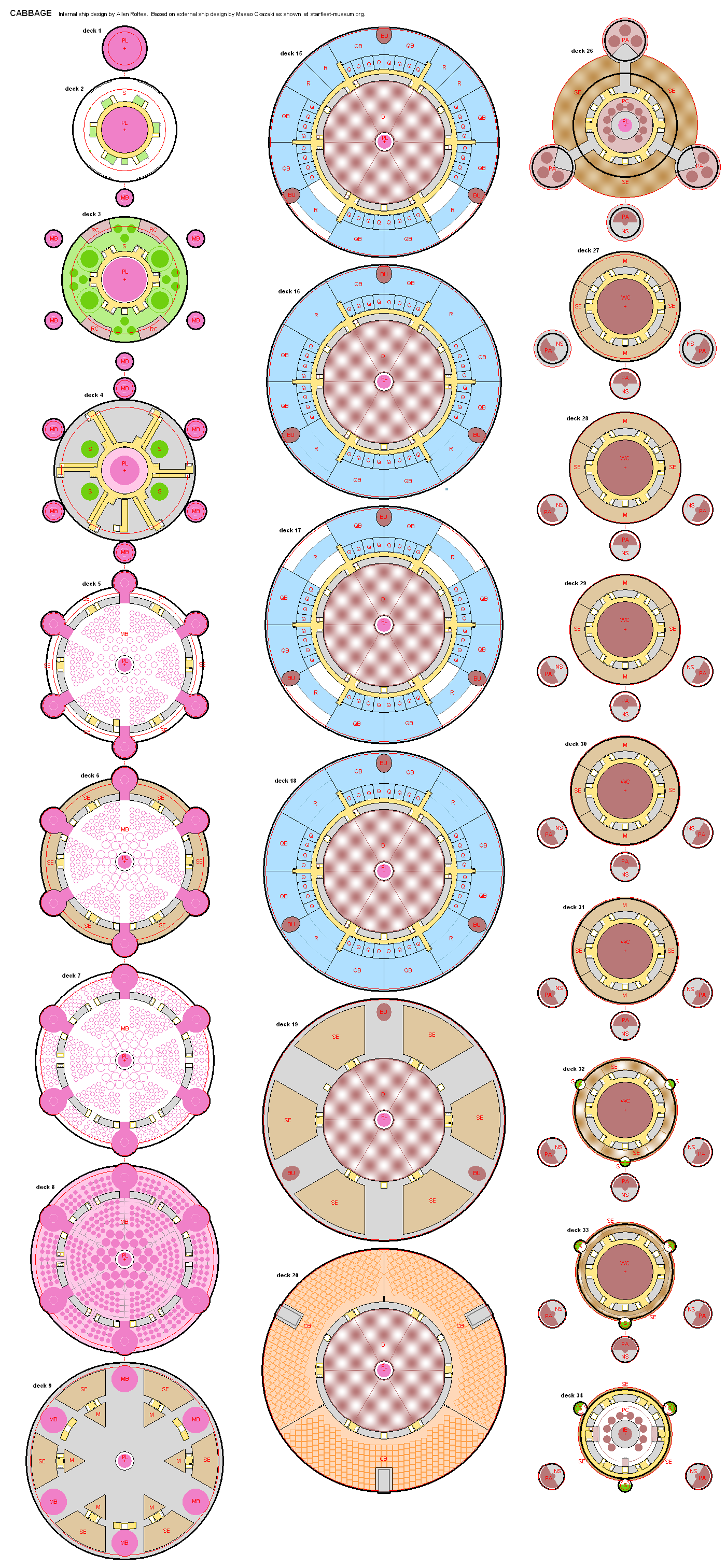 Deck plans, part 1 created by Allen Rolfes (see notes) |
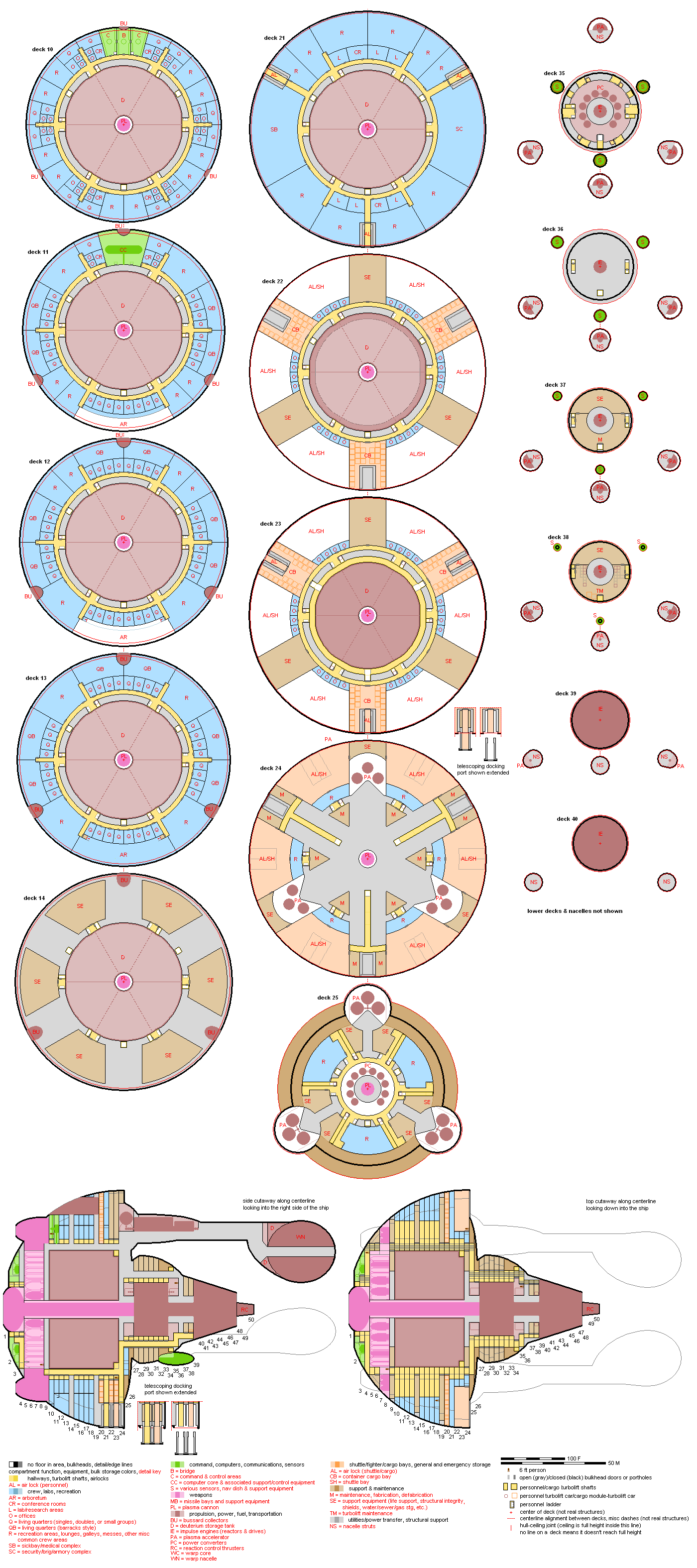 Deck plans, part 2 created by Allen Rolfes (see notes) |
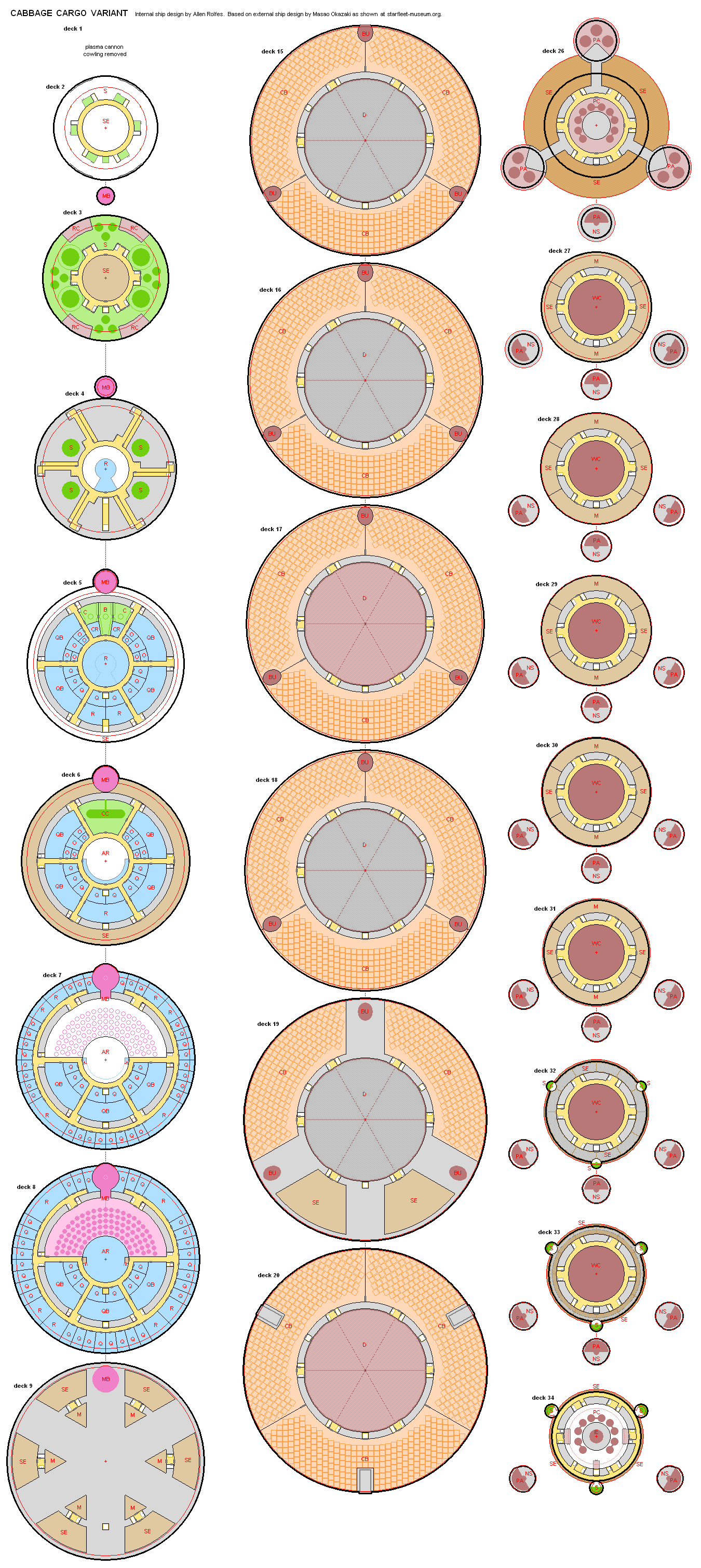 Cargo variant plans, part 1 created by Allen Rolfes (see notes) |
 Cargo variant plans, part 2 created by Allen Rolfes (see notes) |
|
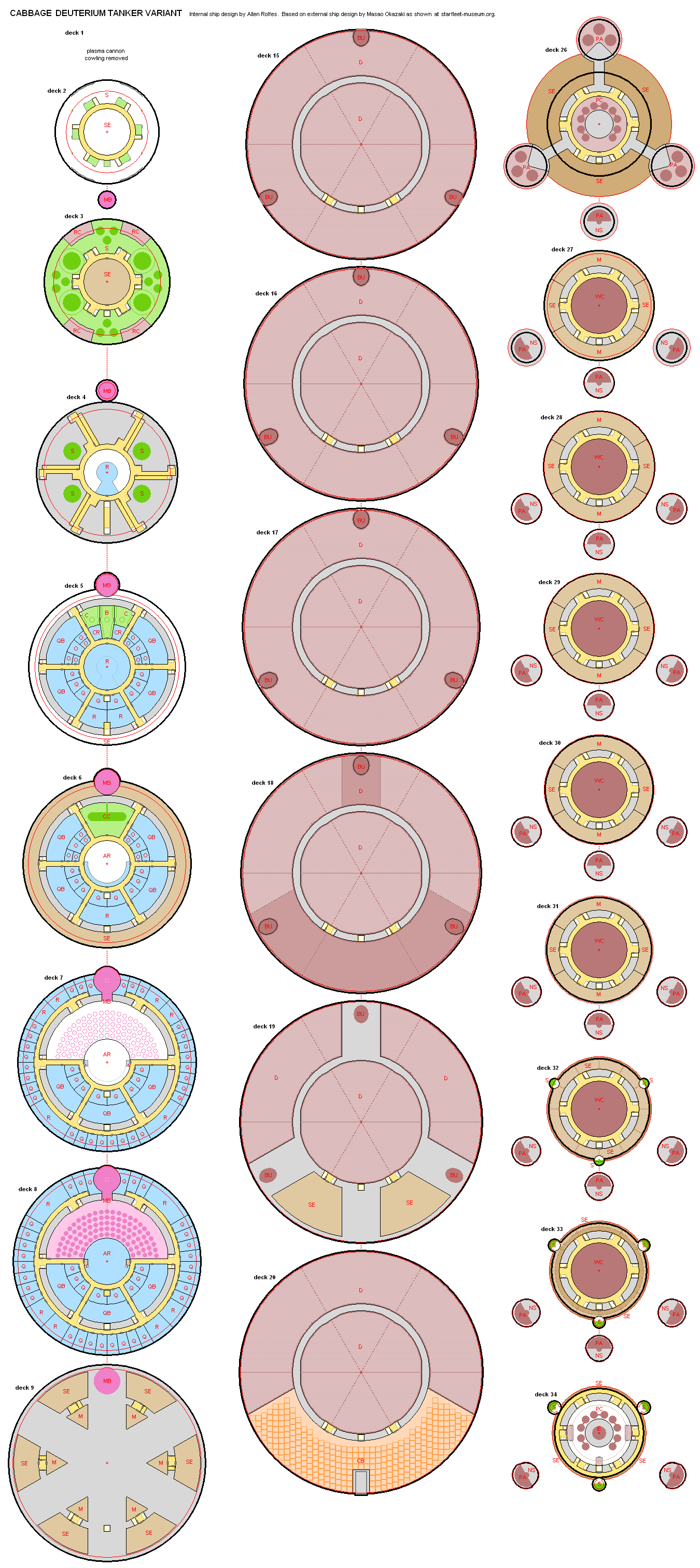 Tanker variant plans, part 1 created by Allen Rolfes (see notes) |
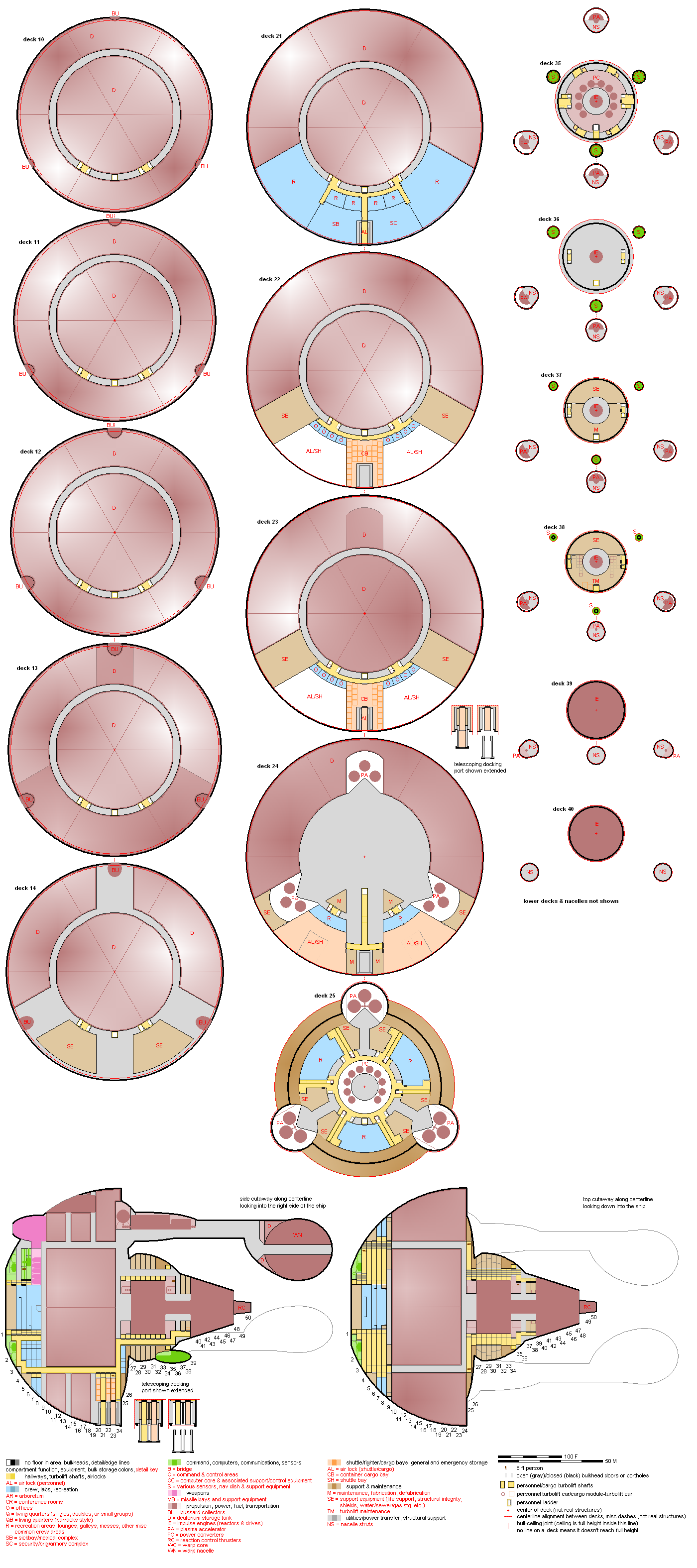 Tanker variant plans, part 2 created by Allen Rolfes (see notes) |
Displacement: 500,000 t
| Overall | 1° Hull | 2° Hull | Nacelles | |
| Length [m] | 157.44 | 60.59 | 57.91 | 102.14 |
| Beam [m] | 112.95 | 112.95 | 50.83 | 19.43 |
| Draft [m] | 112.95 | 112.95 | 50.83 | 31.97 |
Crew complement: 750 crew + 1,000 troops
Weapons: 1 plasma cannon, 6 missile launchers with 150+ "Mothra" or "Mambo" long-range attack missiles, 90+ "Moolah" short-range defensive missiles, 30+ "Grater" or "Goblin" surface-attack missiles
Velocity: wf 2.6, cruise; wf 2.8, supercruise; wf 2.9, maximum
Units commissioned: 105+
*All specifications are estimates unless otherwise noted.
For much of the last 2 centuries, soldiers, historians, and politicians have debated the many unanswered questions about the Earth-Romulan War of 2156 to 2160. What was the cause of the war? Why did the Romulan Star Empire attack the deep space stations of the United Earth (UE)? What did the Romulans hope to achieve? Some have suggested that the UE should be blamed for the war because its aggressive sensor probes and starship patrols led the Romulans to believe an invasion of their territory was imminent; according to this line of reasoning the Romulan attacks upon the UE space stations were preemptive and launched purely in self-defense. Others say that the UE sought war in an attempt to spread human civilization throughout the galaxy.
However, a consensus has slowly been building among Federation historians that the Romulans' attacks were the first step in a campaign to conquer and return to their ancestral homeworld of Vulcan. Some 3 millennia ago, Vulcan was being torn apart by civil and religious wars. Amid the chaos, several factions left Vulcan to establish new societies in nearby solar systems. However, the exiles soon fell to fighting among themselves, leading to repeated cycles of schism, war, exodus, voyage, and resettlement on alien planets further and further from their homeworld. Most of the new off-world colonies withered and died through war, starvation, inbreeding, and natural disasters, but finally, after a hundred generations and a journey of 60 ly, a robust colony was established on a planet orbiting the star Gliese 431, which we now know as Romulus. Over the subsequent centuries, the Romulans built an interstellar society, but they never forgot how they had been exiled from their homeworld. They vowed to return one day and punish their erstwhile oppressors.
In 2153, Romulan ships on patrol from their base at Gliese 480.1 (also known as Taugus) encountered 3 ships of a previously unknown race: Humans. Having the tactical advantage, the Romulans destroyed one of the UESN ships and were even able to glean valuable intelligence from the debris. They learned that the inhabitants of Vulcan still thrived under the teachings of Surak and had allied themselves with the Humans. The Romulans were astounded by the energy and ambition of the Humans, who had progressed from steam power to supraluminal flight in little more than two centuries. If the Vulcans were allied with such a bold race, any Romulan efforts to conquer Vulcan might soon be in vain. While they were now at rough technological parity with the Humans, the Romulans would have to strike quickly before the Humans gained an insurmountable advantage. However, in the likely event that the Humans chose to defend the Vulcans, who had become their important partners in science, culture, and trade, how were the Romulans to prevail? The Romulans concluded that the only way to prevent the Humans from defending Vulcan was to a pose a greater, existential threat to the Humans themselves. To this end, the Romulans planned to attack and occupy the UESN bases in the Gliese 440 and Luyten 143-23 (Innes' Star) systems. These systems were the most antispinward outposts of the UE, and their capture would provide the Romulans direct, unrestricted access to all the major UE population centers. With their core star systems under threat of invasion, the UE, the Romulans concluded, would have little choice but to abandon their Vulcan allies.
Original artwork by Harry-Yu. |

Original artwork by Harry-Yu. |
 |
The UE Stellar Navy (UESN) had established Deep Space Stations Yu-lei and Shen-shu (named after the mythical Chinese guardians of the Gates of Hell) in the late 2140s in the Gliese 440 and Luyten 143-23 systems to monitor the antispinward approaches to the UE core from as-yet-unidentified "over-the-horizon" threats. The close spacing of these stars (0.6 parsec, or 2 light years) allowed the twin stations to host the Aker Array (named after the two-headed Egyptian lion god), an advanced long-baseline passive and active subspace sensor system that provided high-resolution omnidimensional imaging to a distance of 1.5 parsecs. Dedicated subspace communications links connected the two deep space stations to each other and to the Centauri system 3.4 parsecs spinward. After the 2153 skirmish in the Taugus system, the twin stations had received enhanced weaponry and refueling and maintenance facilities to serve as bases for defensive patrols by the Amarillo-class cruisers UES London (CC-33) and UES Al-Qahira (CC-45), the Pioneer-class heavy cruisers UES Firebrand (CH-35) and UES Sentinel (CH-37) as well as a squadron of 5 Archer-class patrol craft (UES Leyton, PC-61; UES Winstead, PC-72; UES McKeggan, PC-75; UES King, PC-78; and UES Castillo, PC-80).
Owing to the unprecedented range and resolution of the Aker Array, the great distances (at least 1.9 parsecs) to the nearest Romulan-controlled star systems GJ 1128 (now known as Qualor) and Hipparchos 54298, and the perceived limitations of enemy warships, the UESN was confident that a successful attack upon the Aker Array stations was extremely unlikely. Indeed, the UESN did not even believe its own fusion-powered ships capable of succeeding in such an attack. However, if the Romulans were to attack, the UESN did not doubt its ability to detect the attack before or soon after its launch and thereby to marshal the UESN fleet to defend their deep space stations and the core star systems of UE space.
In the years following the Kursk Incident, Romulan warships undertook aggressive scouting missions from numerous systems bordering areas controlled by the UE and Andor. Romulan scout ships launched from long-range motherships probed the Andor-held systems of Tlolu (Beta Hydri) and Shressh (Zeta Tucanae) and the UE-held systems of Utopia (61 Virginis), Gliese 440, and Luyten 143-23. These incursions met with stiff resistance from UESN and Andorian intrasystem defensive ships and interstellar cruisers, which were tasked with their own missions of "reconnaissance in strength." These scouting missions often led to tense stand-offs, warning shots, pursuit, and the loss of several small ships. Both the UESN and the UE citizenry feared that these border skirmishes would lead to full-scale war with the Romulans. But where, when, and how would war start?
Unknown to the UE, the Romulans had, for the previous 3 years, devoted the greater part of their national energies to assembling a great invasion fleet in the Beta Corrolis system (Gliese 293), which was 3.1 parsecs from Shen-shu (Luyten 143-23) and beyond the range of high-resolution scanning from the Aker Array. The tip of the Romulan spear was an immense, powerfully armed cruiser known by the UESN code name Cabbage. Cabbage-class cruisers had been developed from an existing interstellar cruiser for the express role of carrying out large fleet attacks across interstellar distances. Although the original cruiser had been designed to operate independently with a balanced load of fuel and payload, the Cabbages carried larger numbers of missiles for ship-to-ship and ship-to-surface attacks and a powerful plasma weapon at the expense of fuel, which was to be carried by accompanying tankers.
Cabbage-class ships weighed an estimated 500,000 tons. Behind the 118-m-diameter hemispherical command hulls was a spherical fusion reactor that powered 3 pedunculated warp nacelles mounted in a 120-degree configuration. The fusion reactor also powered a single axial impulse drive unit with thrust shapers for travel at sublight speeds. The main weapon was an extremely powerful plasma cannon that, although not capable of supraluminal speeds, was effective at ranges up to 5 million km. This plasma cannon had been designed to destroy enemy ships, space stations, and even surface installations. Cabbage cruisers also carried a variety of fusion-powered, warp-capable, fusion-tipped missiles for defense and long-range attacks against ships and fixed targets.
Cabbage cruisers had an observed maximum speed of wf 2.9 and a cruising speed of wf 2.6, which were slightly better than those of the UESN's fusion-powered Amarillo-class cruiser. However, because of the inefficient fusion reactor, which powered both the warp and impulse drives, range at cruising speed likely did not exceed 3 ly despite the large deuterium fuel tanks Cabbage carried. Therefore, to attack across average interstellar distances in the Romulans' push into UE space, refueling en route could not be avoided. Predictably, handling at both warp and sublight speeds was extremely poor and can best be described as sluggish. However, because of their great size, Cabbage cruisers could absorb enormous amounts of damage and remain in action.
The Attacks on Stations Yu-Lei and Shen-shu
Since December 2155, the Aker Array had suffered a series of unexplained technical problems. One day, the subspace emitters might drift off proper alignment, preventing a coherent sensor beam from being produced. Another day, the communication link between Yu-lei and Shen-shu might become unstable, preventing the array from operating at its full range and resolution. As soon as one problem was fixed, another would arise. The engineering staff was overwhelmed and becoming increasingly frustrated, so requested that additional technicians be dispatched from Centauri; however, they were not expected to arrive for at least 4 months. Until the problems were solved, the Aker Array could not operate at full capacity or reliably detect or identify approaching ships. In addition, UES Firebrand was having problems with its integrated logic systems and remained in port at Yu-lei. To this day, the problems that plagued Yu-lei and Shen-shu have never been satisfactorily explained, but sabotage has not been ruled out.
On March 15, 2156, the Earth-Romulan War started with the attack on the Yu-Lei and Shen-shu stations by a combined force of 25 Cabbage cruisers and numerous support ships. The invasion fleet, which had likely left the Beta Corralis system at least 150 days earlier for its 10-light year journey, had been sighted by UES London on defensive patrol some 4 days before its expected arrival, but this was far too late for reinforcements to arrive from the Centauri system. The stations did their best to prepare for the attack, but it became increasingly clear from the size of the approaching fleet that any defense would likely be futile. Stations Yu-lei and Shen-shu and the Aker Array would certainly be destroyed, and both star systems would be occupied by the Romulans. To minimize loss of life, the UESN Admiralty ordered the stations to be evacuated. UES London and UES Firebrand, although not yet fully repaired, left for Centauri with most of the stations' crews 2 days before the attack. The other cruisers, UES Al-Qahira and UES Sentinel, were ordered to engage the invaders with their missiles but then to fall back towards Centauri. The Bison transports UES Gugalanna (AP-32) and UES Taurus (AP-44), which had put into Yu-lei for repairs, could not be made spaceworthy in time and were scuttled by their crews. A small group of volunteers stayed behind to man defensive missile batteries and Archer-class patrol craft in an attempt to destroy as many attacking ships as possible.
The 25 Romulan Cabbages dropped out of warp about 100 million km from Gliese 440 and Luyten 143-23 and began firing their missiles at a distance of 20 million km. Middle- and long-range missiles fired from the cruisers, stations, defensive satellites, and emplacements on planets and moons intercepted approximately 70% of the first waves of Romulan missiles and severely damaged 5 Cabbages (2 at Yu-lei and 3 at Shen-shu) In addition, 3 remotely piloted Archer-class ships (UES Leyton, UES Winstead, and UES King) rammed and destroyed 3 more Cabbages. However, the Aker Array components in solar orbit in both systems were, as expected, completely destroyed by subsequent waves of Romulan missiles. The Cabbages continued to fire their missiles at any UESN assets they could identify and then used their beam weapons to turn the surfaces of planetary bodies and moons to black glass. This first action of the Earth-Romulan War later became known as the First Battle of Hell's Gate.
The victorious Romulan fleet made no effort to pursue the retreating UESN ships but instead took up defensive positions in the two systems. The next few months saw the arrival of 10 additional Cabbages, as well as scores of support ships, including such Cabbage variants as tankers (Tonsil class), subspace sensor/communications ships (Rodent class), and troop carriers (Syrup class) so that the systems could be used as bases for attacks upon the UE and Vulcan. By the summer of 2157, the Romulans were ready to take the next step in their campaign to conquer Vulcan, which would end at the Battle of the Vela Gap (See the Krechet article for additional details).
Later in the War
Cabbage-class cruisers were in service throughout the war. According to UESN Intelligence estimates, some 75 ships had been built by the start of the war and an additional 30 were built through late 2158. In addition to participating in the Romulan attacks at the start of the war on Yu-lei, Shen-shu, and Utopia of the UE and on the Andorian system of Tlolu, Cabbage-class cruisers took part in the Romulan invasion attempt of 2157, which was halted by UESN forces at the Battle of the Vela Gap. All 27 Romulan Cabbage cruisers involved in the invasion (as well as a score of support ships) were destroyed, and an estimated 60,000 Romulan sailors and soldiers lost their lives. In retrospect, such a long-range attack against a prepared enemy was unlikely to succeed given the short unrefueled range and slow speeds of these mammoth cruisers. Wisely, the UE itself never attempted such a large-scale attack until ships powered by matter/antimatter drives entered service in 2158.
No Cabbage-class cruisers are known to exist today. However, a 1/10th scale model of a Hell's Gate Cabbage and debris from destroyed ships are on display at the Starfleet Museum.
Chowder-class Cruisers*
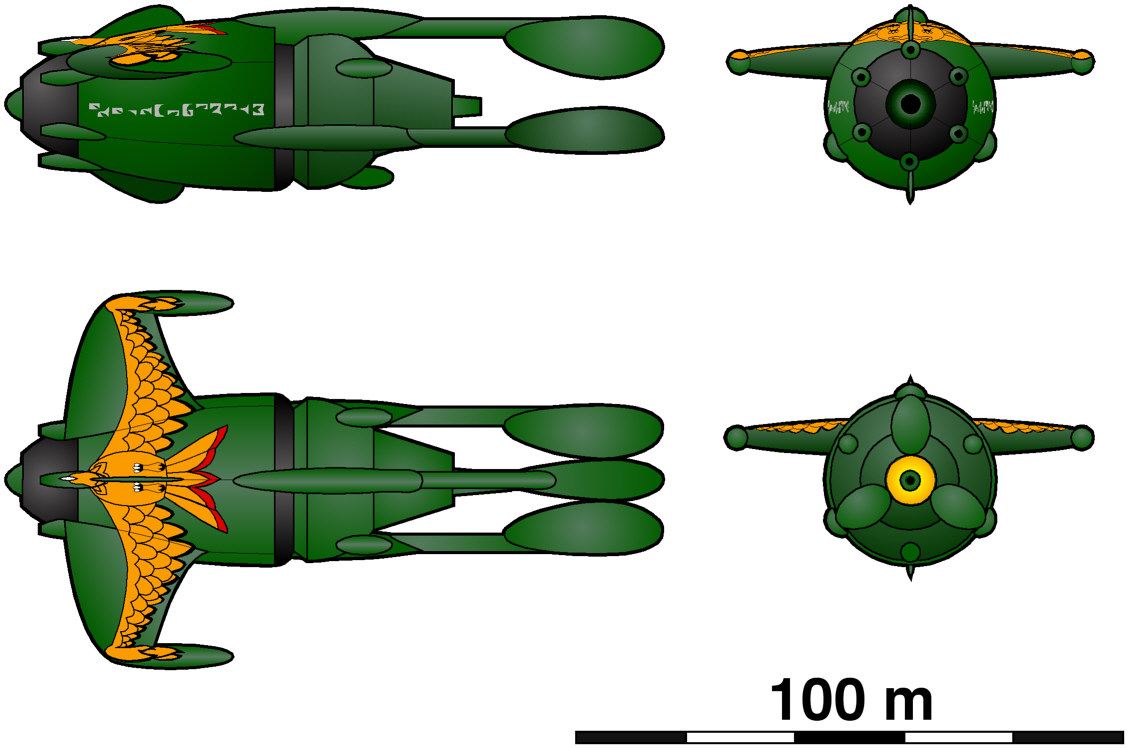 Orthographic views |
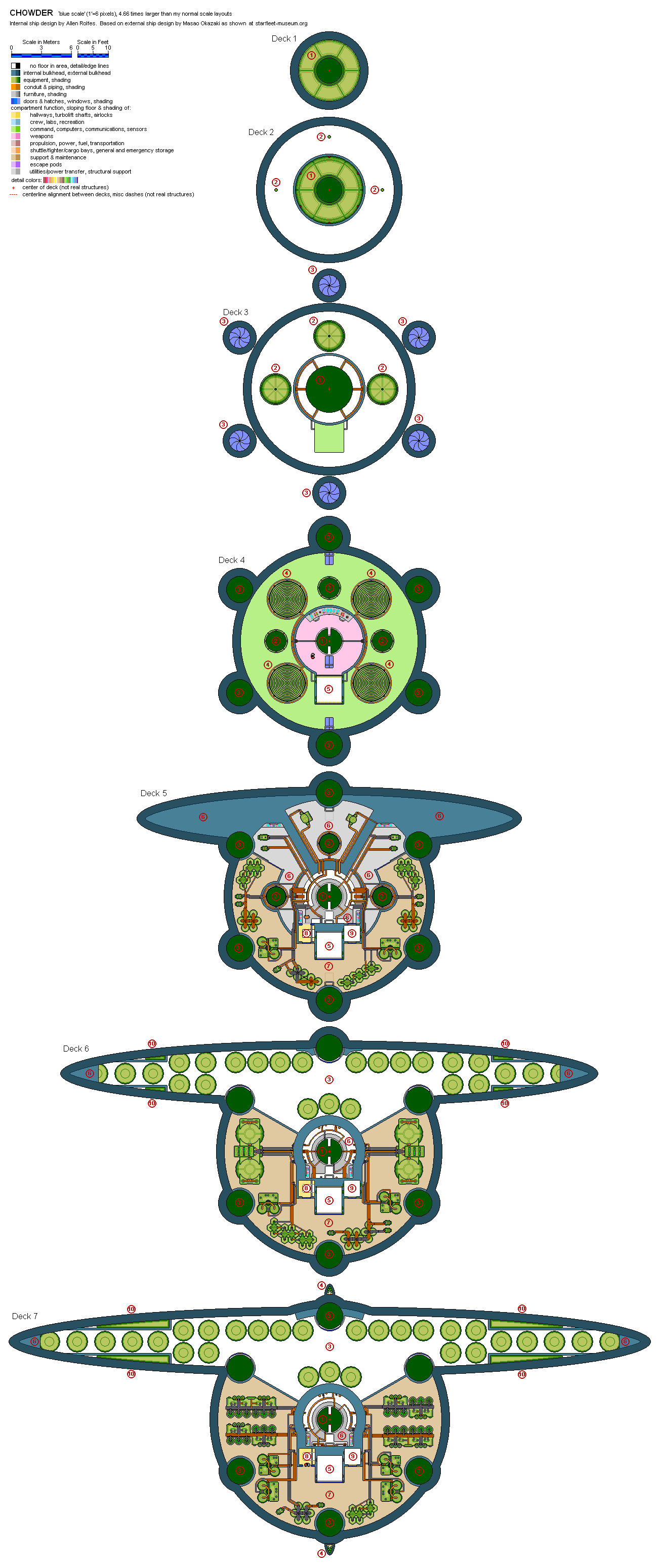 Bluescale plans, part 1 created by Allen Rolfes (see legend) |
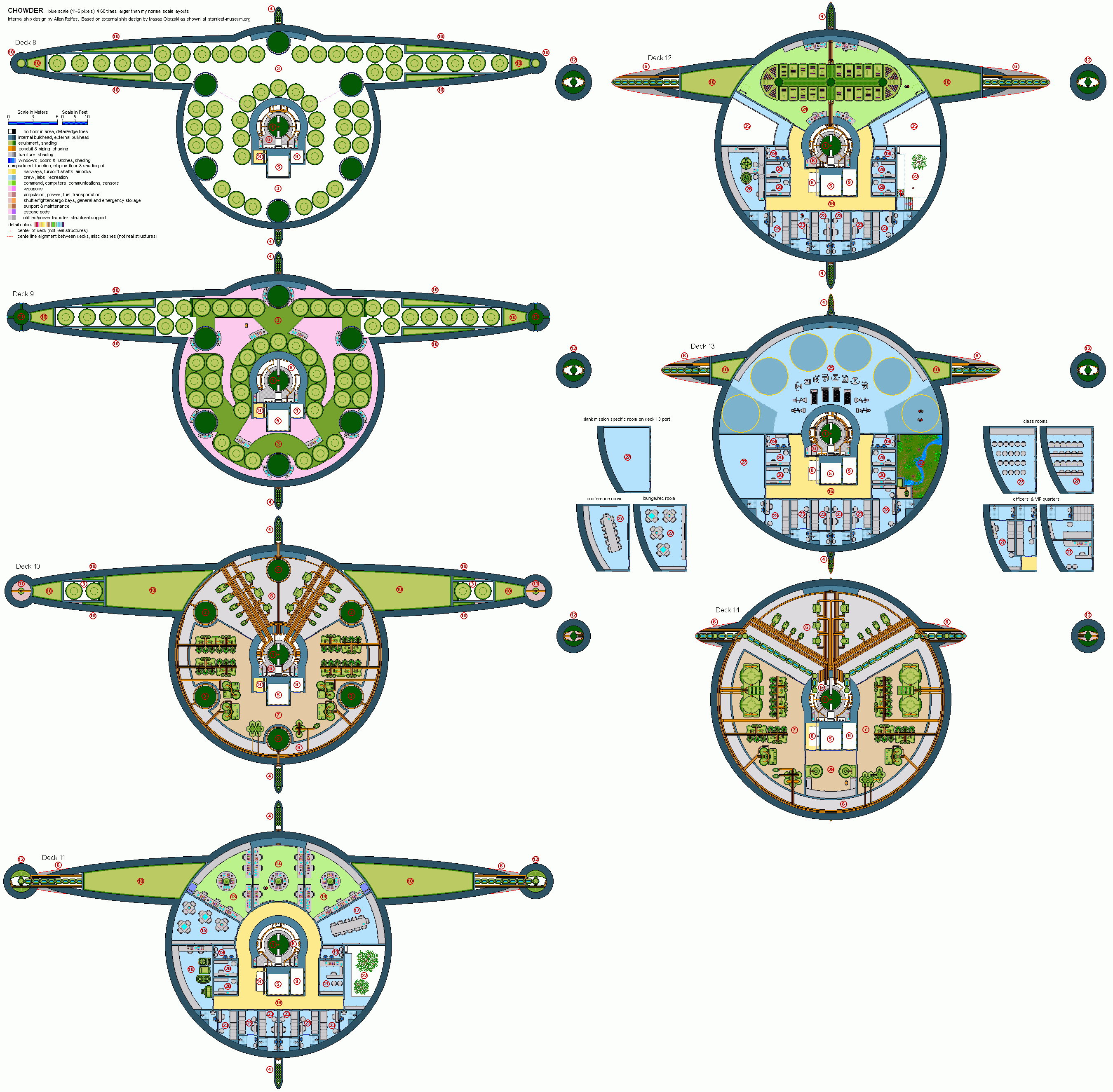 Bluescale plans, part 2 created by Allen Rolfes (see legend) |
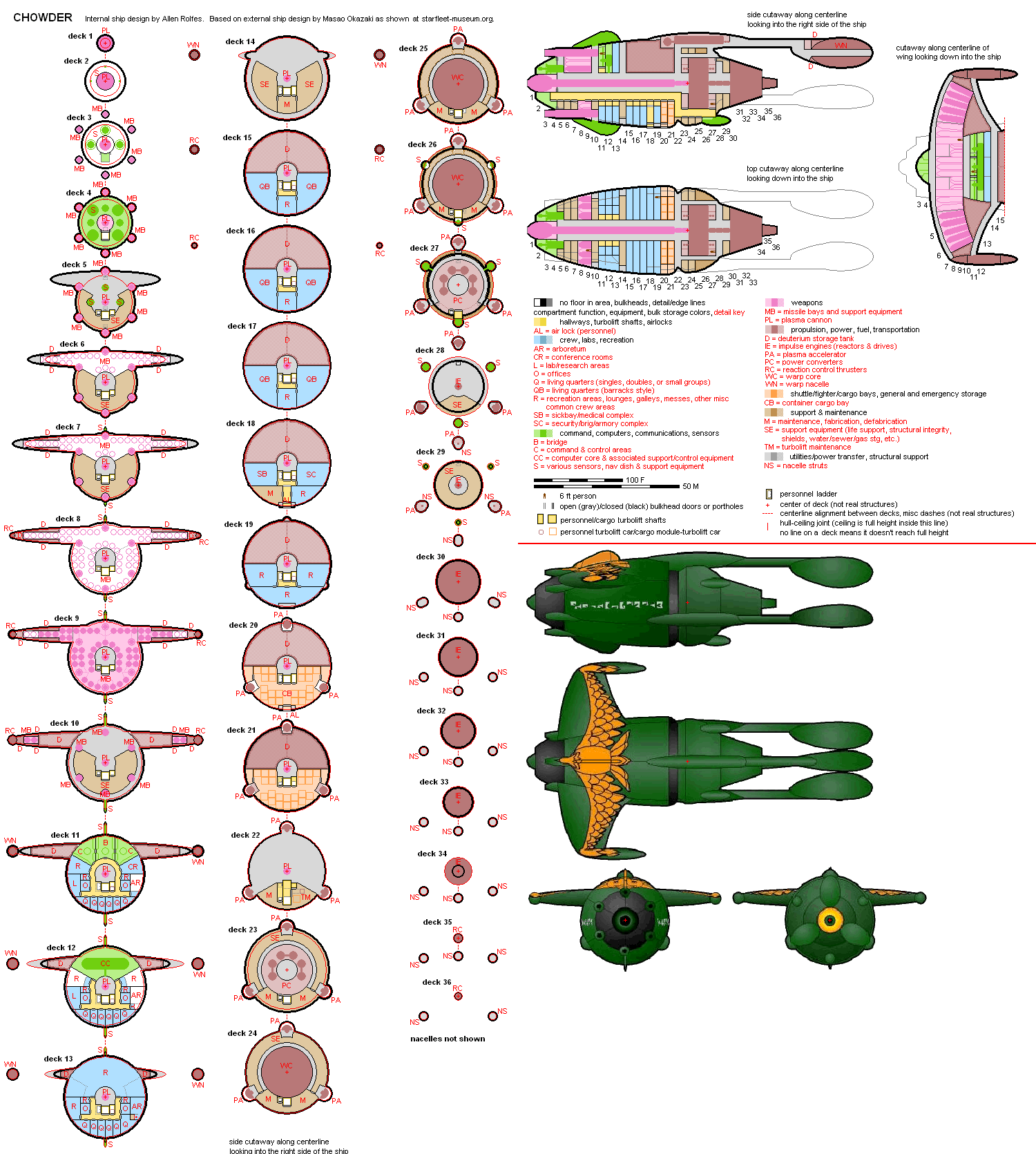 Deck plans created by Allen Rolfes (see notes) |
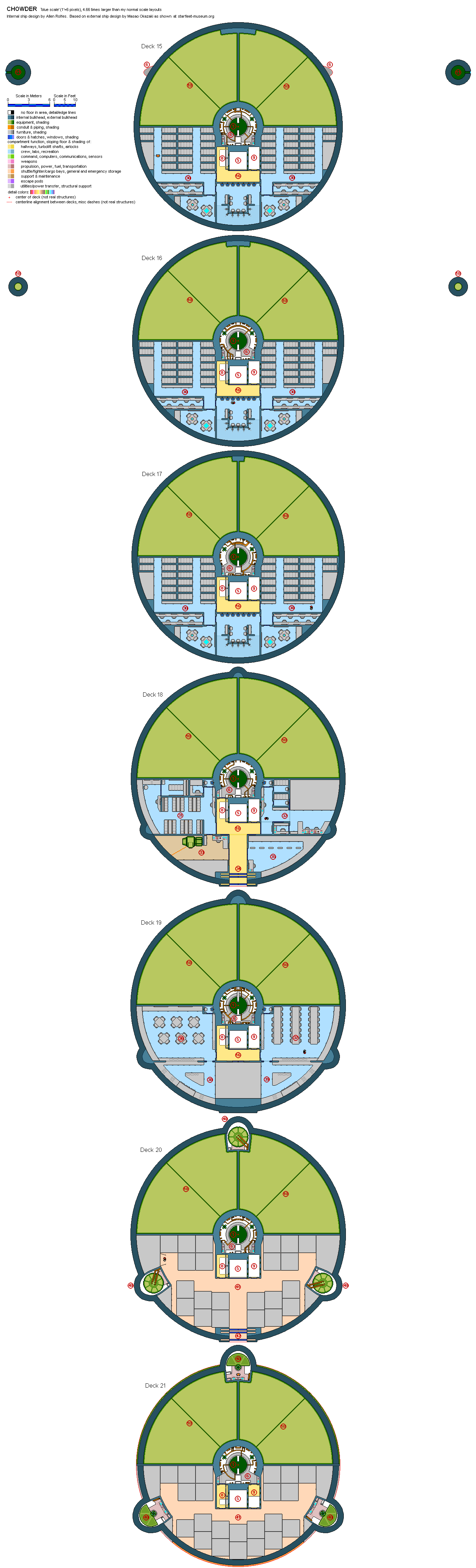 Bluescale plans, part 3 created by Allen Rolfes (see legend) |
 Bluescale plans, part 4 created by Allen Rolfes (see legend) |
 Bluescale plans, part 5 created by Allen Rolfes (see legend) |
 Bluescale plans, part 6 created by Allen Rolfes (see legend) |
Standard displacement: 60,000 t
| Overall | 1° Hull | 2° Hull | Nacelles | |
| Length [m] | 126.54 | 46.10 | 37.46 | 69.705 |
| Beam [m] | 68.15 | 30.94 | 330.85 | 7.175 |
| Draft [m] | 68.42 | 30.94 | 30.85 | 10.81 |
Crew complement: 120
Weapons: 1 plasma cannon, 6 missile launchers with 30+ "Mambo" or "Misfit" long-range attack missiles, 10+ "Moolah" short-range defensive missiles
Velocity: wf 2.5, cruise; wf 3.1, supercruise; wf 3.2, maximum
Units commissioned: 150+
*All specifications are estimates unless otherwise noted.
As UESN forces began their advance into Romulan territory in late 2158, the Romulans gradually abandoned any realistic hopes of resuming offensive action or achieving their war aim of conquering Vulcan. Instead, defense of Romulan space and Romulan worlds became paramount. For this reason, ship production began to shift from Cabbage-class cruisers to the purely defensive Chowder-class cruiser. Also known as "squids" or "Veronus" by UESN Intelligence, Chowder cruisers replaced the large hemispherical hull of Cabbage with a gently tapered cylindrical hull 30 m in diameter. A small wing atop the hull was tipped with two spindles that may have been auxiliary directional warp nacelles for increased maneuverability at warp speeds. A smaller version of the standard Romulan fusion power plant appeared to be used, but slightly slimmer warp nacelles were capable of propelling Chowder to a maximum observed speed of wf 3.2. Armament included a plasma cannon and six missile launchers.
Chowder-class cruisers, usually in groups of three, were based in the predicted pathways of UESN attacks. They attempted to approach within approximately 8 au (1.2 billion km) of their targets, usually Yorktown carriers, and launch their missiles before the carriers' own Minotaur fighters had been launched. Since Yorktowns were often escorted by Powhatan cruisers, one Chowder usually attempted to engage the Powhatan while the others attacked the carrier. Chowder normally carried "Mambo" or "Misfit" antiship warp missiles (as many as 30 were observed to be fired from a single Chowder cruiser) with an estimated range of 12 au (1.8 billion km) and a 100-kt fusion warhead.
If, on the other hand, a Chowder cruiser were able to close within 5 million km of its target without itself being destroyed, the plasma cannon could be used. With a direct hit this devastating weapon could destroy any UESN ship, but was completely unguided and incapable of supraluminal speeds. However, neither could it be spoofed or otherwise stopped without a direct hit with a defensive fusion-tipped missile or impact with a suitably large object. Since the plasma bolt took some 17 seconds to reach targets at extreme range, the most effective tactic was for Yorktown carriers to be ambushed while in normal space, most likely when launching or recovering fighters and, therefore, unable to maneuver.
Despite their increased speed and maneuverability, Chowder-class ships were only marginally more successful than the larger Cabbage-class ships in stopping attacks by UESN task forces comprising M/AM-powered cruisers, carriers, and fighters. By the time Chowder entered service, most UESN task forces included Marconi-class cruisers equipped with long-range subspace sensors that could detect attacking Romulan cruisers at distances of 1 ly. UESN missiles generally had higher speeds, greater ranges, more accurate guidance systems, and larger warheads than did fusion-powered Romulan missiles and were usually able to intercept and destroy Romulan cruisers long before they were able to fire their own missiles. Furthermore, Chowder was completely outclassed in ship-to-ship combat by the smaller, faster, and more maneuverable Minotaur fighters and even Powhatan-class cruisers. Of the 112 Chowder-class cruisers encountered by UESN and Andorian forces during the war, 82 were destroyed. Chowder cruisers were, however, able to destroy or heavily damage 5 Yorktown carriers and 19 other ships of various types.
Clavicle-class Cruisers*
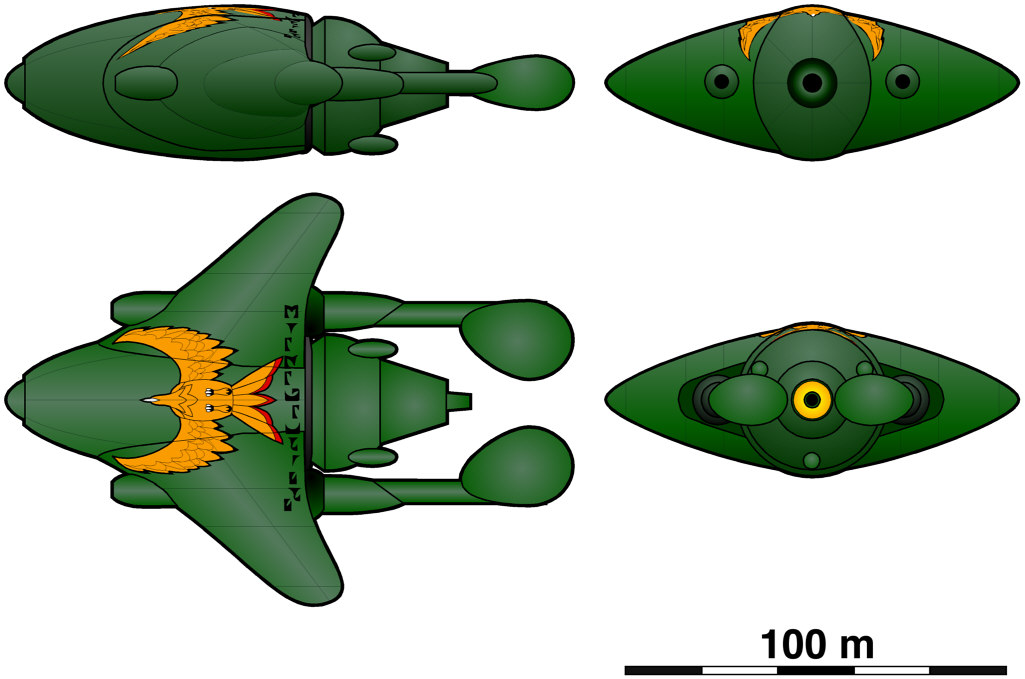 Orthographic views |
 Deck plans, part 1 created by Allen Rolfes (see notes) |
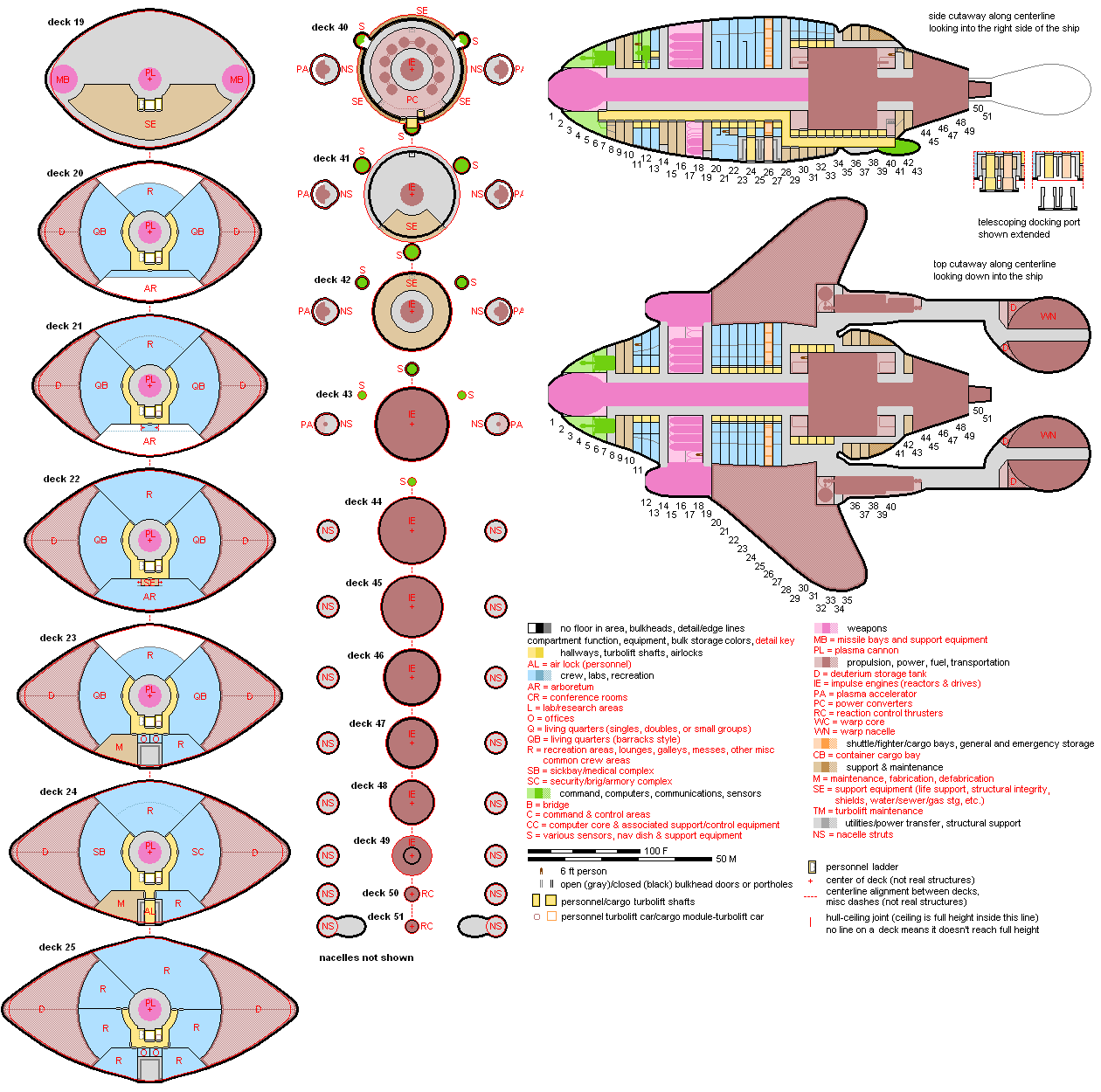 Deck plans, part 2 created by Allen Rolfes (see notes) |
Displacement: 175,000 t
| Overall | 1° Hull | 2° Hull | Nacelles | |
| Length [m] | 148.34 | 87.83 | 41.42 | 70.93 |
| Beam [m] | 107.35 | 107.35 | 35.29 | 22.199 |
| Draft [m] | 39.83 | 39.83 | 35.29 | 13.49 |
Crew complement: 285
Weapons: 1 plasma cannon, 2 missile launchers with 50+ "Mullet" long-range attack missiles, 30+ "Mascot" short-range defensive missiles
Velocity: wf 3.0, cruise; wf 4.1, supercruise; wf 4.2, maximum
Units commissioned: 20+
*All specifications are estimates unless otherwise noted.
In late 2159, as the war entered its final year, UESN task forces had entered Romulan space and were systematically destroying the Romulans' Imperial Guard. Attacks by individual or massed Cabbage- and Chowder-class cruisers were rarely successful and only served to increase the numbers of Romulan crewmen killed in action. With only their inefficient fusion reactors, the Romulans had little hope of stopping the UESN juggernaut. To this end, the Romulans spent a large proportion of their research funds attempting to harness the power of quantum singularities. However, the Romulans seemed to have greatly underestimated the complexity of the problem as this avenue of research would not produce anything of military value before the end of the war (and indeed for the next 150 years). More importantly, this fruitless endeavor would divert resources from areas of research with more immediate applications, such as long-range sensors, sensor countermeasures, missile propulsion and guidance systems, and antimissile defense. While Romulan fusion reactors were perhaps only slightly less efficient than UE reactors at the start of the war, the UE would continue to refine their fusion power plants to approach the limits of theoretical efficiency and then leap ahead with the development of M/AM reactors. The Romulans also began work on their own M/AM reactor during the war but were, perhaps, 30 years behind the UE. Indeed, the Romulans' inability to field any M/AM munitions until the 2260s suggests they were also unable to mass-produce antimatter. Starfleet Intelligence believes that the Romulans likely halted all work on M/AM reactors by about 2200 and would only receive M/AM reactors from the Klingons in the 2260s.
Late in the war, the Romulan finally produced a cruiser able to have some success against UESN M/AM-powered cruisers, at least in some realms of combat. The Clavicle-class cruiser (named "Tyrranus" by UESN Intelligence) was again a member of the Chowder family of cruisers. However, rather than being radially symmetric about the longitudinal axis, Clavicle had a bilaterally symmetric "winged" main hull with two nacelles and was the first Romulan ship to actually bear some resemblance to a bird of prey. Clavicle displaced an estimated 175,000 t and was observed at speeds exceeding wf 4.2. External scans suggest Clavicle was able to attain this level of performance through a more warp-dynamic hull configuration and a larger, more powerful fusion reactor. This larger power plant and smaller hull necessarily limited the amount of deuterium that could be carried, which in turn likely limited Clavicle's range. However, since these ships generally did not attack over distances greater than 0.1 ly, this short range was not a serious operational limitation. On the other hand, this reactor was considerably less stable than earlier reactors: several Clavicle ships were destroyed by catastrophic reactor failures when either pursuing or being pursued by UESN ships.
Although Clavicle cruisers were clearly the best Romulan design of the war, their lack of a M/AM power plant meant that they could not engage UESN at their maximum speeds over long distances. They were, however, used extremely effectively as ambush hunters, lying silently in wait for unwary UESN carriers, cruisers, and transports, which they would then attack at wf 4.0 or better. At such speeds a Clavicle was often able to penetrate a cruiser's or carrier's defensive perimeter so that the plasma weapon could be used to devastating effect. However, if the attack was unsuccessful or if UESN forces chose to pursue, Clavicle could be run down and destroyed.
Fortunately for the UE, Clavicle cruisers entered service too late and in numbers too small to have much effect on the outcome of the war. Of the 15 Clavicle-class ships observed by UE alliance forces during the war, 11 were destroyed. Although it saw only limited service before the end of the war, the Clavicle class with its flat, twin-nacelle layout served as the basis for Romulan cruisers for the next 100 years.

 |
Last modified: 01.11.16 |